Human Factors in Railway Signaling: Designing Fail-Safe Systems for Optimal Operator Performance and Safety
What Are Human Factors in Safety-Critical Railway Systems?
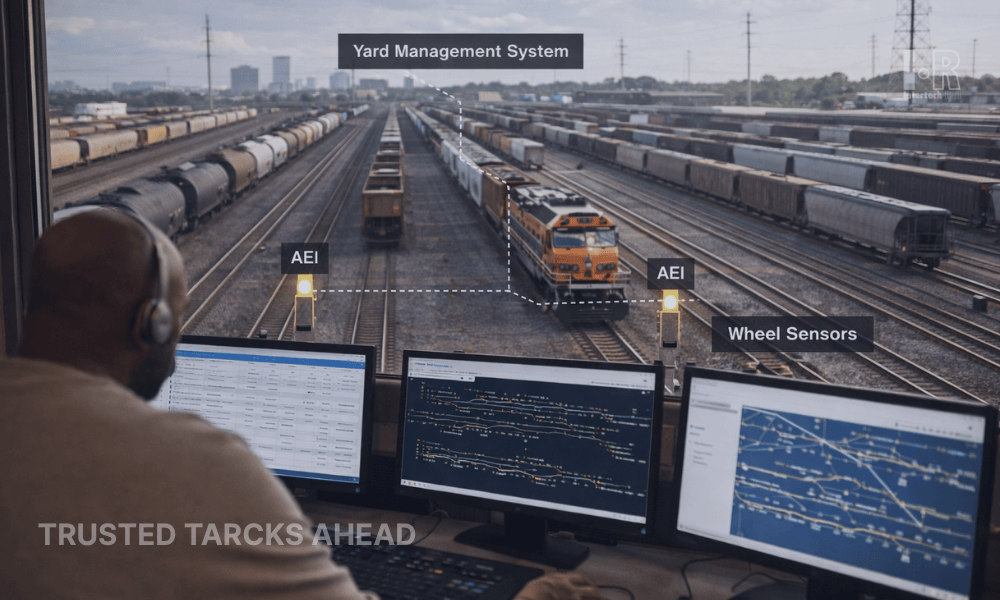
If you look only at the design documents, everything makes sense. Clear logic. Defined responses. Fail-safe behavior. Then you step into a control room.
Multiple alarms. Different systems are talking at once. Small delays that are not supposed to be there. Operators scanning screens, switching context constantly. It is not chaotic, but it is far from clean.
That is where railway human factors actually exist. Not in theory. In that gap between what the system shows and what the operator understands.
Even the most robust railway safety systems depend on that moment.
The Role of Human Operators in Railway Signaling
Automation helped. No doubt. But it did not simplify the job. In many cases, it just changed the type of attention required.
Operator Responsibilities and Decision-Making Processes
Operators are not just following procedures. They are interpreting situations.
Sometimes the system is clear. Sometimes it is not. A signal takes longer than expected. An alarm appears without context. You hesitate for a second. That second matters. That is real railway operator performance. Not ideal scenarios. Real ones.
Human Error in Signaling and Its Consequences
We often talk about human error in railway signaling as if it were a failure of discipline. It usually is not.
More often, it is accumulation. Too many inputs. Too little prioritization. Interfaces that ask the operator to think when they should be helping them decide.
At some point, the system becomes part of the problem.
Human-Centered Design Principles for Fail-Safe Systems
A system can be technically correct and still fail in operation.This happens more than people admit.
User Interface (UI) and User Experience (UX) Design
A good human-machine interface railway setup does not try to be complete. It tries to be usable. There is a difference.
Operators do not need every detail. They need clarity under pressure. If they have to search for meaning, the design is already failing.
Ergonomics and Workplace Design Considerations
Long shifts expose things that design reviews ignore. Screen brightness slightly off. Reflections. Noise in the room. None of this breaks the system. But it slowly affects attention. And attention is everything.
Cognitive Psychology and Operator Performance
Attention, Perception, and Memory in Signaling Tasks
Operators rely on patterns more than rules. They recognize behavior.
When systems are consistent, reactions are quick. Almost automatic. When something feels different, even slightly, the operator pauses. That pause is not a mistake. It is uncertainty.
Stress and Fatigue Impact on Safety
Fatigue does not show up dramatically.
It shows up as a delay. As missed details. As a slower interpretation. That is enough to impact railway signaling safety.
How to Design Fail-Safe Systems Considering Human Factors?
Human-Machine Interface (HMI) in Signaling Systems
Intuitive Displays and Alarm Management
Alarm systems should guide attention. Many still compete for it. You can see it clearly during abnormal situations. Everything triggers. Nothing stands out.
Usability Testing and Operator Feedback
What works in a lab often fails in real operation. Not because the design is wrong, but because reality adds noise. Operator feedback tends to expose that gap quickly.
From a design perspective, integrating tools like Rail-ID, along with AEI systems and wheel sensor inputs, helps create more consistent and reliable data environments, reducing the need for operator interpretation.
Automation and Human-in-the-Loop Control
Balancing Automation with Operator Control
Good railway automation control does not remove the operator. It keeps them involved. When operators become passive, awareness drops. And once awareness is gone, recovery is slower.
Collaborative Systems and Shared Responsibility
The best systems are not fully automated. They cooperate. Automation handles repetition. Humans handle uncertainty. That balance is where reliability actually happens.
Training and Competency Management
Simulation-Based Training for Critical Scenarios
Some situations are rare, but when they happen, they define the outcome. Simulation is one of the few ways to prepare for that.
Continuous Skill Assessment and Improvement
Experience helps, but it fades. Systems change. Interfaces evolve. Operators need constant exposure. Not just initial training.
In the end, signaling safety is not just engineered. It is experienced.
When railway human factors are properly considered, systems stop depending on ideal behavior and start working with how people actually operate.
Share article