AEI Systems for Railway Asset Tracking: Automatic Equipment Identification Technology and Implementation
Understanding AEI Technology in North American Railways
Freight railways rarely suffer from a lack of technology. More often, they suffer from small uncertainties that recur daily. A train passes a point. Someone records it. Someone else confirms it later. Most of the time, this works until volume increases, pressure rises, and the gaps start to show.
In North America, Automatic Equipment Identification emerged from this exact tension. AEI did not replace railway expertise, and it did not attempt to redesign operations. It simply removed one fragile link: the need to confirm what had already happened manually. Once railcars could identify themselves automatically, consistency became the norm rather than the exception.
What is Automatic Equipment Identification (AEI)?
The move from manual to automatic car identification was gradual, and that was part of its strength. Visual checks, radio communication, and handwritten logs were not eliminated overnight. They were quietly overtaken by a system that produced fewer disputes and fewer corrections.
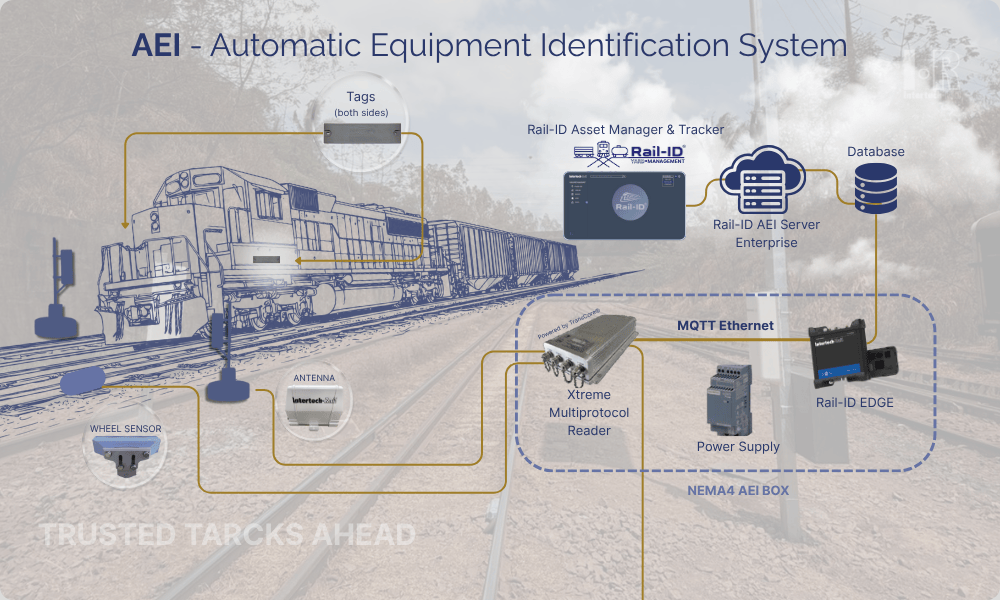
Technically, AEI relies on passive RFID tags mounted on rolling stock and active readers installed along the track. The tags do not require power. They do not communicate unless prompted. Readers operate continuously and capture identification data as trains pass at normal speed. Nothing about the process is interactive, and nothing needs to be adjusted once it works.
How AEI Systems Work in Practice
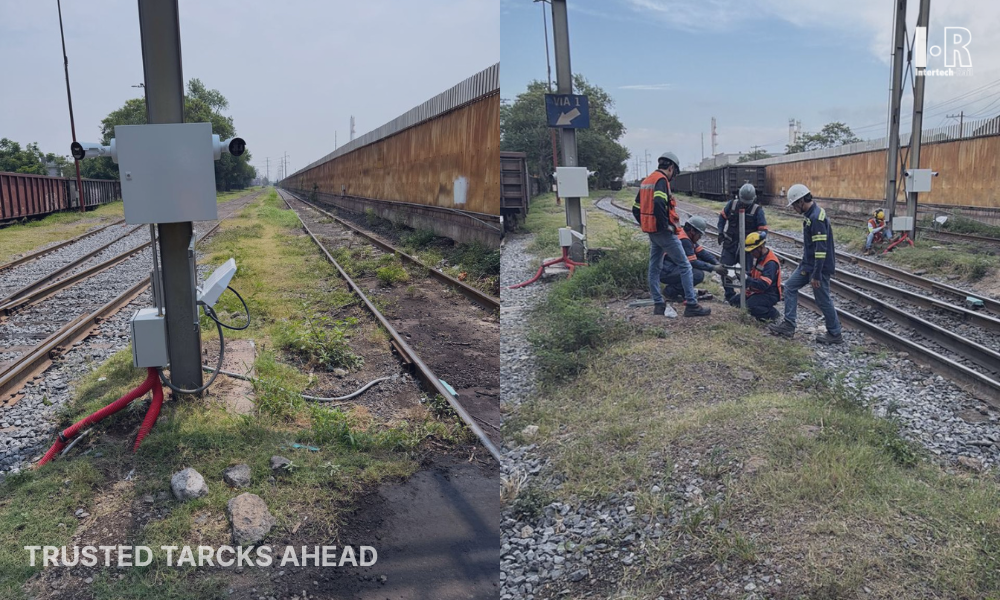
Outside documentation, AEI behaves less like an IT system and more like infrastructure. Reader placement is driven by operational meaning, not geometry. A read event only matters if it happens where decisions are made, yards, interchange points, or network boundaries. Placing readers elsewhere may increase coverage statistics, but it rarely improves operations.
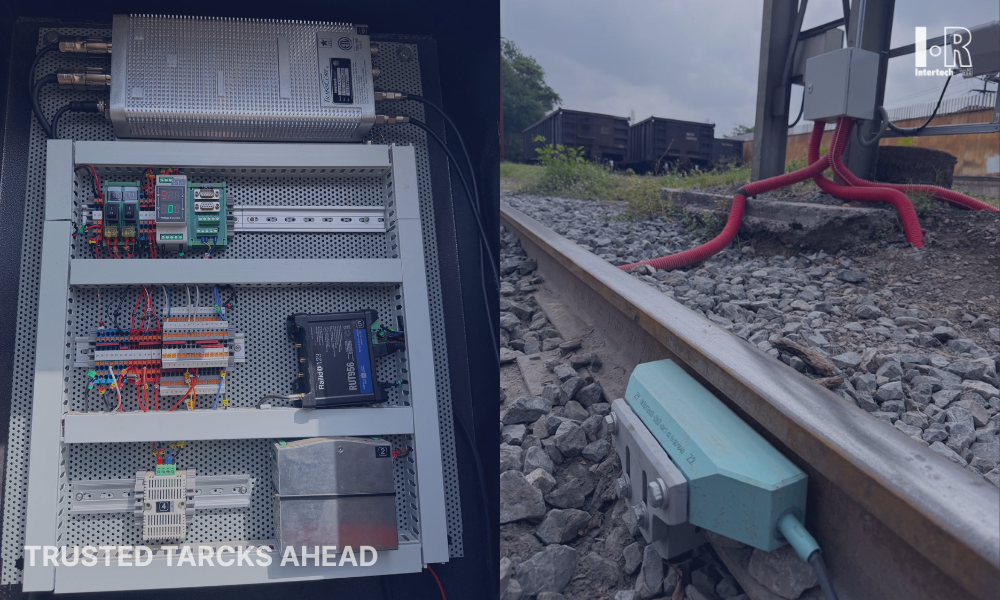
Environmental exposure shapes every design choice. Trackside equipment lives with vibration, dust, moisture, and temperature swings that never fully stabilize. Over time, these conditions decide what survives. Reader assemblies, enclosures, and mounting systems, such as those used in Intertech Rail’s AEI solutions, reflect this reality. They are built to be ignored, which is often the highest compliment in railway engineering.
Tag mounting follows the same logic. A compliant tag installed carelessly becomes unreliable long before its expected service life. Orientation, height, and mechanical protection matter more than most specifications suggest. In practice, installation discipline carries as much weight as technology selection.
The Business Case for AEI Implementation
The value of an AEI railway system is rarely obvious in a single report. It accumulates. Each identification event adds to a movement history that becomes increasingly difficult to dispute. Operations teams rely on it to confirm train makeup. Commercial teams use it to resolve interchange questions without escalation.
Real-time asset visibility reduces manual reconciliation, which reduces friction. Fewer arguments. Fewer emails. Faster decisions. Customers rarely see the system, but they feel its effects when tracking information aligns with reality more often than not.
AEI System Components and Architecture
AEI tags and transponders are designed for endurance. Passive RFID tag durability is not a feature; it is a requirement. Exposure is constant, and replacement cycles must be long. Interoperability, defined by AAR S-918, ensures that railcar identification systems remain usable across operators and suppliers.
Trackside reader infrastructure depends on placement strategy, stable power, and reliable communication. Environmental protection is inseparable from performance. A reader that works perfectly in theory but fails after a season in the field adds no value.
Once collected, data must be filtered and validated before it becomes useful. Integration with railroad management systems allows railway RFID tracking to support analysis and reporting, rather than remaining a standalone record. Asset intelligence platforms, including those developed by Intertech Rail, build on this foundation without changing how trains move.
AEI rarely attracts attention, and that is precisely why it works. By quietly converting movement into dependable information, automatic equipment identification continues to support more resilient, more predictable railway operations.
Share article