Fail-Safe Relay Maintenance: How Often Should You Inspect, Test, and Replace Safety-Critical Relays?
Why Relay Maintenance Is a Safety-Critical Activity
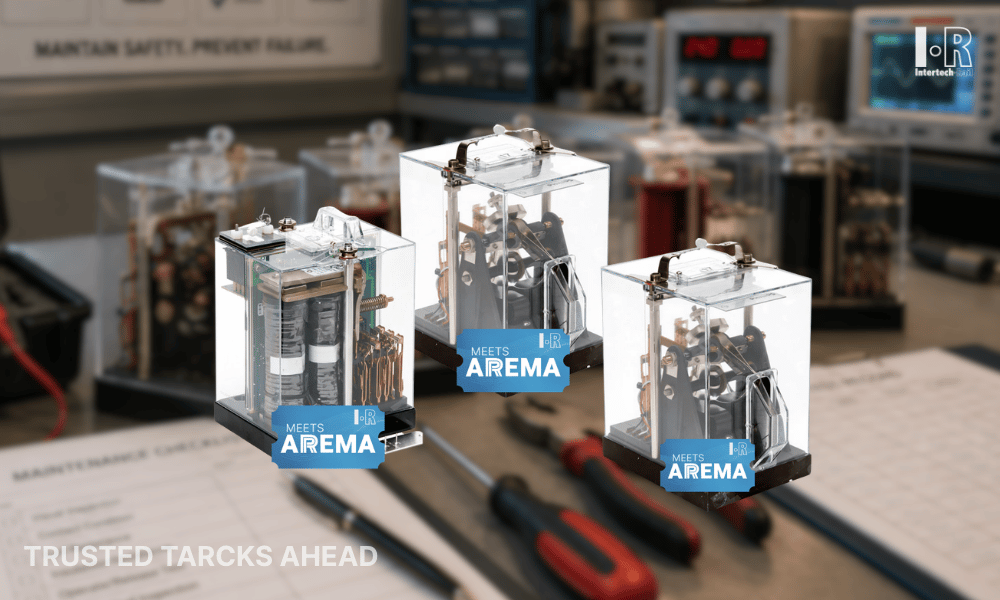
What Happens to Fail-Safe Relays Over Time?
Contact Wear and Mechanical Degradation
Relays age gradually, and most of the time, the process is not obvious at first.
Inside a signaling circuit, every relay operation creates small amounts of electrical and mechanical wear. Contacts arc slightly during pickup and release. Springs weaken over long operating periods. Coil insulation becomes more sensitive to humidity, temperature variation, and contamination from dust or oil particles.
Environmental conditions matter a lot here.
Relay houses located near ports, mining operations, or coastal territory usually show corrosion earlier than dry inland locations. Freight corridors with constant vibration also tend to accelerate mechanical wear. In some older installations, maintainers still monitor relays that have remained in service for several decades.
Not all of them age the same way.
Some begin showing unstable pickup characteristics during cold mornings. Others develop contact resistance drift long before complete failure occurs. Experienced maintainers often notice these changes during periodic testing months before operations reports any visible problem.
What Are the Consequences of Neglected Relay Maintenance?
Small Defects Become Operational Problems
A relay does not need to fail to create trouble in the field.
Contaminated contacts may intermittently interrupt track circuits. Weak return springs can affect drop-away timing. Loose terminals sometimes create voltage loss that only appears under load conditions.
Those are difficult problems to troubleshoot because the circuit may operate normally during one test and behave differently several hours later after temperature or humidity changes.
That is one reason. Signal maintenance standards remain extremely strict across railway signaling systems. The objective is not only reliability. It is preserving predictable fail-safe behavior under abnormal conditions.
Inspection and Testing Procedures
What Should Be Checked During a Routine Relay Inspection?
Visual Inspection and Electrical Measurements
Most routine Signal relay inspection work begins with a visual examination.
Technicians look for contamination, cracked cases, overheated terminals, corrosion, damaged contact fingers, and signs of moisture intrusion. Mechanical movement is checked carefully as well. A relay that feels sluggish during manual operation usually receives additional testing before returning to service.
Electrical measurements come next.
Older relays often show increasing contact resistance before other symptoms appear. Because of that, milliohm testing remains common practice in many maintenance programs. Coil resistance, insulation resistance, contact gap, and overtravel measurements are also verified during scheduled inspections.
Some maintainers still keep handwritten notes about relays that behave differently during winter mornings or after heavy rain. Official measurements may remain acceptable for quite a while before the issue becomes obvious during operation.
How Do You Test a Fail-Safe Relay's Performance?
Functional Testing Under Real Conditions
Proper Relay testing procedures involve more than bench measurements alone.
Pickup voltage and drop-away voltage testing are especially important because fail-safe circuits depend on predictable release behavior. Timing relays used in crossing systems and route-locking circuits also require periodic calibration checks.
Many experienced technicians prefer testing relays inside the actual circuit whenever possible. Certain intermittent problems only appear under real operating conditions.
GO DEEPER ON THESE TRACKS: Discover how fail-safe relays became one of the most trusted technologies in railway signaling with What Are Fail-Safe Relays? The Complete Guide to Safety-Critical Switching Technology in Rail Signaling, explore the strengths and tradeoffs between electromechanical and solid-state designs in Fail-Safe Relay vs. Solid-State Safety Relay: Which Technology Should You Choose for Your Signaling Application?, and learn why maintenance routines remain critical for operational safety in Fail-Safe Relay Maintenance: How Often Should You Inspect, Test, and Replace Safety-Critical Relays? These related articles are already published or will be available soon.
Replacement Strategies and Best Practices
When Should a Fail-Safe Relay Be Replaced?
Balancing Age, Condition, and Service History
Not every relay reaches the end of life at the same point.
A heavily used relay inside a busy interlocking may wear much faster than a lightly used unit in secondary territory. Moisture, heat, airborne contamination, and vibration all influence long-term condition.
For that reason, many railways combine time-based and condition-based replacement strategies.
A relay may be replaced after abnormal test results, after lightning events, or during scheduled maintenance windows intended to reduce the risk of future service disruptions. Good Railway relay replacement programs focus heavily on consistency because signaling systems depend on predictable equipment behavior over long operating periods.
Share article