How Do Railways Confirm That a Complete Train Has Cleared a Section?
Why clearing a section means proving the whole train is through, not just assuming it?
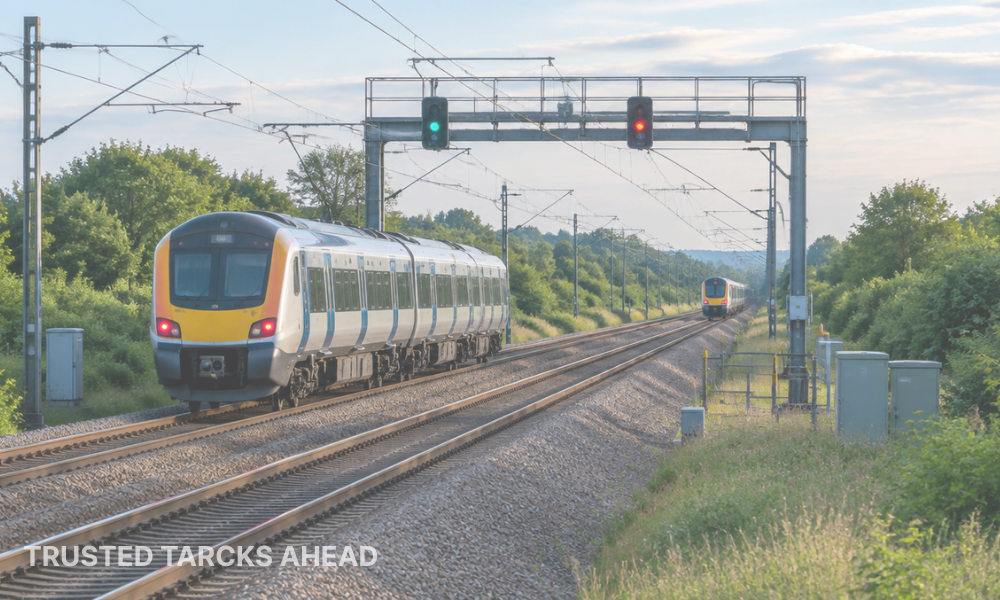
There's a question every dispatcher and every signaling system has to answer dozens of times a shift: is the whole train through? It sounds trivial until you remember what's at stake. Train integrity monitoring is the difference between releasing a section because it's empty and releasing it because it looks empty.
Why train integrity is a safety function, not a formality
What happens when part of a train is left behind?
A detached vehicle sitting in a section that's been released as clear is exactly the scenario the whole function exists to prevent. The next train, or a road user at a crossing, has no idea it's there. The requirement didn't become mandatory because of theory. It became mandatory because railways learned, repeatedly and the hard way, that assuming the train was complete isn't good enough.
Which systems depend on integrity confirmation?
More than people expect. Section release depends on it. Moving block depends on it entirely, since the safe zone follows the train and has to know where the train actually ends. Level crossing reopening depends on it too, because a crossing that lifts its barriers early is a very short conversation with a very bad outcome.
How integrity is confirmed today
How does axle counting prove integrity?
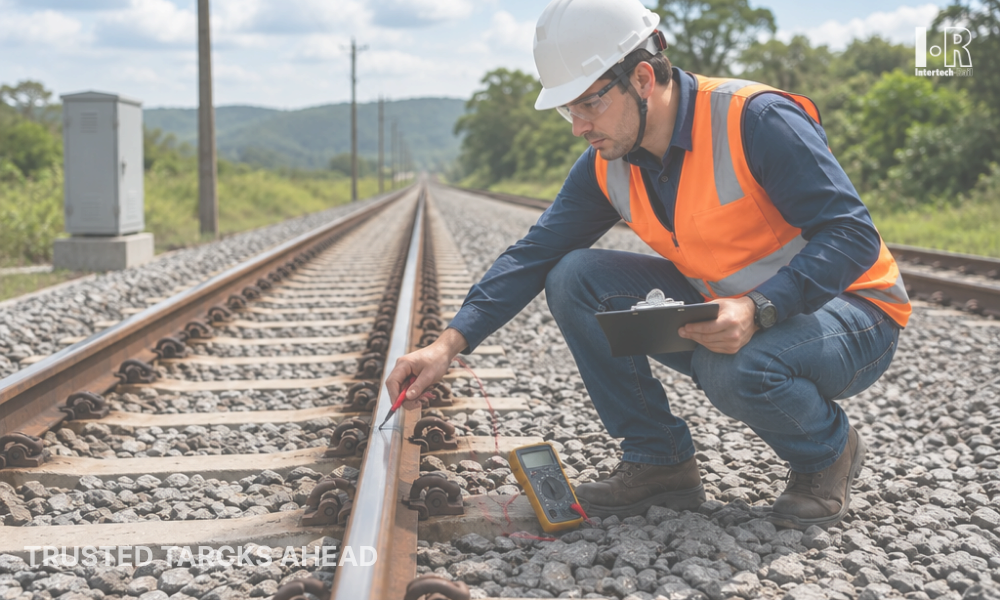
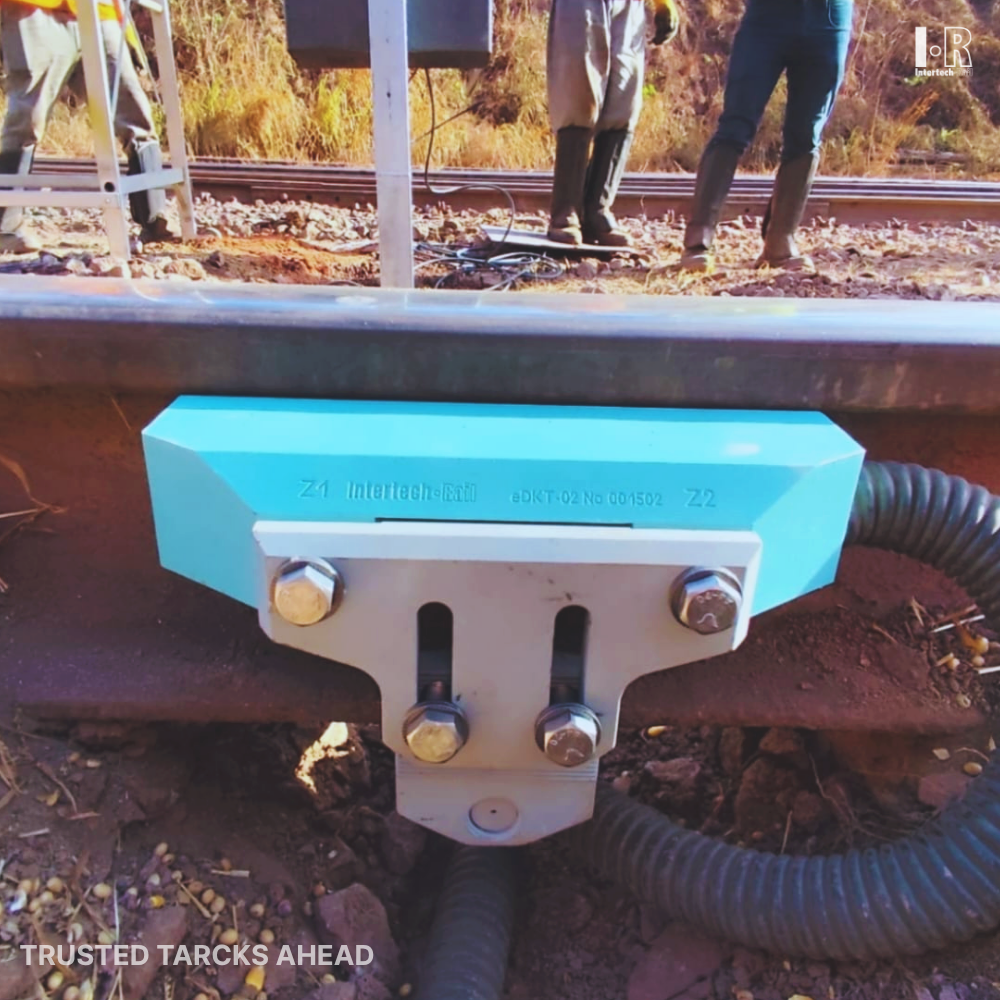
The logic is simple: count the axles in, count them out, and the section is clear only when the numbers match. Release logic is deliberately conservative. Any doubt keeps the section occupied. That's where reset discipline matters, because a count mismatch is not a nuisance to clear as fast as possible. It's the system telling you something might be left behind, and the reset procedure should force someone to go and check. Reliable wheel sensors at the section boundaries are what make the whole approach trustworthy, and axle counter train integrity checks are only as good as the sensor feeding them.
What role do end-of-train devices play?
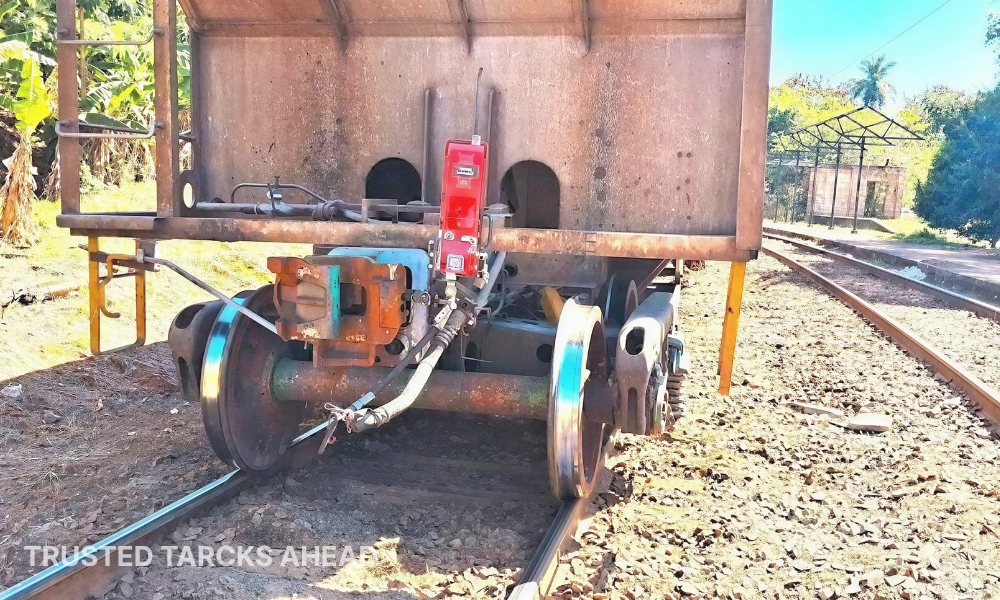
The end-of-train device confirms the last vehicle is still attached. EoT tags and telemetry report back from the rear of the consist, and in freight, brake pipe pressure adds a second signal. If the train separates, the brake pipe goes with it, and the pressure change is hard to miss. AEI end-of-train tags fit naturally into this picture.
Integrity in freight yards and long consists
Why is integrity harder on long freight trains?
Long consists, mixed equipment, and patchy communication range all work against you. A two-mile freight train isn't a passenger set with a fixed formation. Cars get added, swapped, and reordered, and the rear of the train may be a long way from anything that can hear it. Under ETCS-style systems, train integrity ETCS requirements push the confirmation onto the train itself, which is much harder to retrofit on a mixed freight fleet.
How does AEI data support consist verification?
Compare the sequence of reads against the expected consist. Missing cars, extra cars, and out-of-order cars all show up as a mismatch, and a platform like Rail-ID is built to process exactly those read events. AEI doesn't replace axle counting or EoT, but it gives an independent check that costs very little once the read points are already there.
Designing the integrity layer
What should an operator specify?
Start with the confirmation method, then be specific about latency and what happens in degraded mode. When the primary method fails, what does the system do? Then define the interfaces: interlocking, yard systems, and the control center all need the same answer at the same time. A good specification reads like a list of failure cases, not a feature list.
GO DEEPER ON THESE TRACKS: integrity confirmation is a prerequisite for the block and control strategies railways choose downstream. Explore Fixed Block or Moving Block: How Does Block Design Limit Your Line Capacity? to see why moving block depends on it, discover How Do Rail Yards Combine Train Detection and Railcar Identification? for how AEI data verifies a consist, and review CBTC, ETCS, or PTC: Which Train Control Architecture Fits Your Network? for the architectures that require it. These related articles are already published or will be available soon.
What is Train Control and how does it work?
Train control refers to the systems and processes used to manage train movements across a railway network. It combines train location data, signaling information, operating rules, and communications systems to ensure trains operate within authorized limits while maintaining safe separation and efficient traffic flow.
Why is Train Control important for modern railway operations, and what challenges can it solve and what benefits does it provide?
Train control helps railways balance safety, capacity, and operational efficiency. It reduces the risk of unauthorized movements, supports higher traffic density, improves dispatching decisions, and helps maintain schedule adherence. Effective train control also enables railroads to respond more quickly to disruptions and changing operating conditions.
What technologies are commonly associated with Train Control?
Train control systems commonly incorporate signaling infrastructure, centralized traffic control, positive train control, communications networks, onboard equipment, wheel detection systems, GPS positioning, radio communications, and real-time operational monitoring platforms. Increasingly, these systems also integrate data analytics and automated decision-support tools.
What Intertech Rail solutions are available for Train Control?
Intertech Rail supports train control applications through signaling components, fail-safe relays, wheel sensors, switch machines, and railway identification technologies. The company’s infrastructure solutions help provide accurate field data and reliable control inputs that support safe and efficient train operations.
Share article