How Do You Specify a Switch Machine for Heavy-Haul and Remote Turnouts?
The turnout sets the requirements. The datasheet should follow.

Ask three engineers what a switch machine specification should say, and you’ll get three different lists. Ask a maintainer who has dug one out of a frozen turnout at night, and you’ll get a fourth, and it’s usually the best one. A solid switch machine specification starts with the turnout, not the catalog, because the turnout is what the machine has to live with for decades.
What the turnout demands from the machine
Which conditions define the specification?
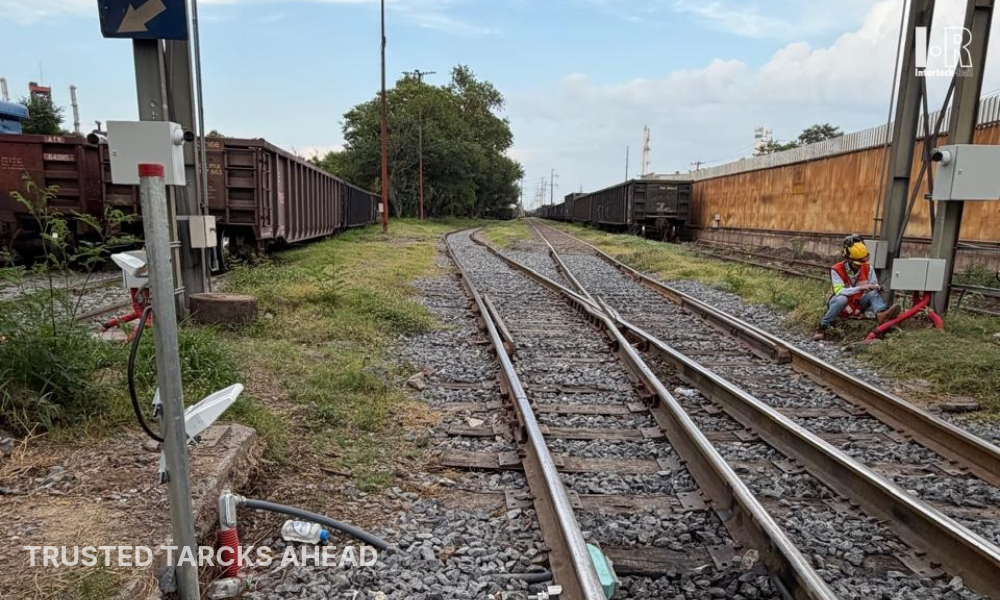
Axle load, traffic density, and turnout geometry come first. A heavy-haul turnout with trains crossing it all day asks far more of a machine than a lightly used siding. Then the weather: temperature range, contamination, snow, and sand. Ballast dust and ice in the point area find every weakness in a design.
Why do machines fail before their rated life?
Usually, the machine was never the real problem. It was undersized for the force the points need, or something was obstructing them. Then come misalignment, rod wear, and a foundation that moved a little every winter. The machine takes the blame, but the specification missed the site.
The parameters that belong on the datasheet
Which numbers decide the selection?
Throwing force, stroke, throw time, and holding force belong on every datasheet, and point machine throwing force deserves the closest look, because it has to cover the worst case at the turnout, not the average one. Add trailability, manual operation, and a hand-throw backup. A trailable point machine lets a train run through a set switch without wrecking it, which matters far more in a yard than on paper.
How does the drive technology change the envelope?
It changes how force reaches the points, how the machine handles shock under heavy axle loads, and what your crews maintain: lubrication, seals, and adjustment. Intertech Rail covers both sides. The IRYM-16 is spring-hydraulic with no rotating parts, rated at 16.7 kN of adjustable throw force and about 1.2 seconds per throw. On the electric side, there are the IRM23 Mainline, the IRM6, the IRM3, and the IR5G.
Detection, control, and safety integrity
How is point position proven to the signaling system?
The signaling system has to know the points are where they should be: normal, reverse, or somewhere in between. That’s what SIL4 point detection railway applications are built around, so write it into the specification. The IRYM-16 uses inductive proximity sensors and also detects an open point or a disconnected rod. For the rest of the range, IR lists fail-safe design and SIL4 support, and the IRYM-16 certification details are available on request. If machines are already in the field, ask early whether detection can be retrofitted. Sometimes it saves a full replacement.

How is the machine commanded in the field?
Through the interlocking, from local control, or in yard switching, and the IRYM-16 can also be operated by radio from the locomotive. Each mode has its own wiring and habits, so say which ones the machine must support.
Site requirements and lifecycle cost
What does the location have to provide?
A power budget, for a start. Remote sites make that hard, and the IRYM-16 is built for it: a solar-charged 12 VDC battery gives around 300 throws per charge, and it operates from -40 °C to +85 °C. Foundation, drainage, and clearance are the unglamorous items that decide whether any machine stays aligned. I’d rather see them on the datasheet than discover them at installation.
How do you compare cost across the asset life?
Put the options in a comparison table: force, duty cycle, spares. Then ask when replacement beats repeated repair. Past a certain point, patching one more failure costs more than a new unit. The IRYM-16 suits remote switches, yards, and industrial sidings, and it’s trailable up to 20 mph. For mainline turnouts, start with the IRM23 Mainline and confirm the numbers with Intertech Rail.
GO DEEPER ON THESE TRACKS: the machine is one decision in a reliable turnout. Explore Which Wayside Detectors Does a Freight Network Actually Need? for complementary trackside detection and monitoring, discover When Should a Relay-Based Interlocking Be Modernized? to see where point detection meets interlocking, and review How Are Train Movements Authorized Where There Are No Signals? for low-cost point detection on unsignaled lines. These related articles are already published or will be available soon.
Título ou What are Switch Machines and how do they work?
Switch machines are electromechanical devices that move and lock railway turnouts, directing trains from one track to another. They receive commands from signaling or interlocking systems, physically position switch points, and provide status feedback. Proper operation ensures that routes are aligned correctly before train movements are authorized.
Why are Switch Machines important for modern railway operations, and what challenges can they solve, and what benefits do they provide?
Switch machines play a critical role in route control, yard operations, and network capacity. Reliable switch performance helps prevent service disruptions, reduces delays caused by turnout failures, and supports safe train routing. Modern switch machines also improve maintenance planning through diagnostic and condition-monitoring capabilities.
What technologies are commonly associated with Switch Machines?
Switch machines are commonly integrated with interlockings, signaling systems, track circuits, relays, motor control systems, position detection sensors, condition monitoring platforms, and remote diagnostics. Many railways are also incorporating predictive maintenance technologies to identify developing mechanical or electrical issues before failures occur.
What Intertech Rail solutions are available for Switch Machines?
Intertech Rail offers switch machine solutions designed for railway signaling and turnout control applications. The company also provides complementary technologies, including fail-safe relays, wheel sensors, and signaling hardware that support reliable route control and railway infrastructure operations.
Share article