How Should Rail Teams Move from Fixed-Interval Maintenance to Risk-Based Inspection Planning?
Why Fixed-Interval Maintenance Is Not Always Enough
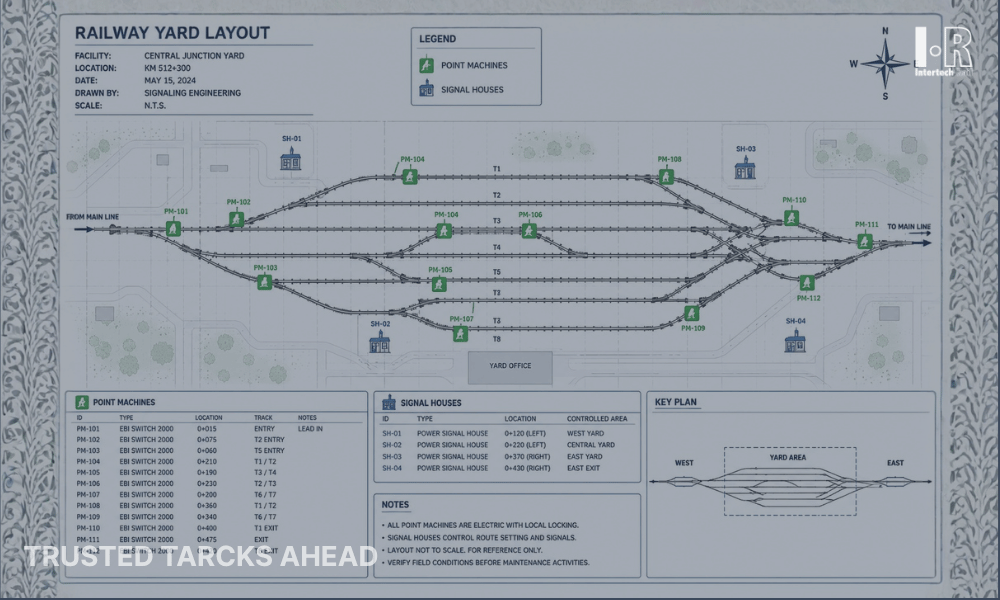
A maintenance supervisor once pointed to two point machines installed only a few hundred meters apart and asked a simple question.
"Why are we inspecting these on the same schedule?" It was a fair question.
One machine sat near a drainage problem that flooded several times each year. The other operated in relatively stable conditions and had generated almost no maintenance activity for years. Even so, both appeared on the same maintenance sheets month after month, almost as if the railway expected them to behave in the same way. I remember thinking that the question was much bigger than those two machines.
What Are the Limits of Calendar-Based Inspections?
Assets with Different Failure Patterns but the Same Inspection Cycle
Traditional fixed-interval maintenance programs for railways bring structure and consistency. They also make life easier when planning inspections months in advance.
The challenge arises once equipment begins to age in the real world.
It does not take long for neighboring assets to develop completely different personalities. One may run quietly for years with barely a mention in the maintenance logs. Another becomes the asset that everybody on the territory seems to recognize by location alone.
Sometimes the reason is obvious. Sometimes, nobody can quite explain it.
Either way, the maintenance calendar rarely notices the difference.
The Risk of Over-Maintaining Low-Risk Assets and Missing High-Risk Ones
One veteran maintainer described it to me this way.
"We spend half the morning checking equipment that never gives us trouble, then spend the afternoon dealing with the one we didn't have time to visit."
He was joking. Mostly.
The reality is that some assets attract attention because they genuinely need it, while others continue operating year after year with very little intervention. The difficult part is knowing the difference before something interrupts service.
What Is Risk-Based Inspection Planning?
Combining Criticality, Failure Probability, and Operational Impact
Years ago, during a maintenance review meeting, an engineer reduced the entire concept to a single sentence.
"Some failures create paperwork. Others create headlines."
The room laughed, but everyone understood the point immediately.
A fault at a remote location and a fault at a major passenger junction may involve similar equipment, yet the consequences can be worlds apart. That simple observation sits at the heart of Risk-based railway maintenance.
Why Risk-Based Planning Supports Better Resource Allocation
Every maintenance department eventually runs into the same problem.
There are always more inspections to perform than available time to perform them.
Track access becomes limited. Crews get pulled into corrective work. The weather interferes with planned activities. Before long, priorities start making decisions on their own.
Risk-based planning simply brings more structure to those decisions. It helps teams focus their effort where the operational consequences are highest instead of spreading attention evenly across every asset.
How to Build a Risk-Based Maintenance Framework
Which Inputs Should Be Used to Rank Assets?
Failure History, Asset Age, Traffic Density, Environment, and Safety Criticality
Some of the most useful information is already available.
Historical failures, asset age, traffic levels, environmental exposure, and safety criticality often provide a surprisingly clear picture of where problems are most likely to emerge. Maintenance teams have been gathering this information for years, even if it was not originally intended for risk scoring.
Condition Monitoring Data and Work Order Trends
Work orders can be particularly revealing.
I once reviewed records for a location that had generated multiple corrective actions over an eighteen-month period. None of the individual issues seemed significant. Viewed together, they told a very different story.
Patterns rarely announce themselves immediately.
They emerge gradually.
Moving from Plan to Execution
How Can Teams Implement Risk-Based Inspections Gradually?
Start with High-Criticality Corridors and Known Problem Assets
One of the biggest mistakes is trying to transform an entire network all at once.
Most railways see better results by beginning with locations that already have a story to tell. Perhaps it is a busy corridor that appears repeatedly in maintenance meetings. Perhaps it is a troublesome group of assets that crews know by heart because they visit them so often.
Those locations usually provide enough lessons to shape the next phase of the program.
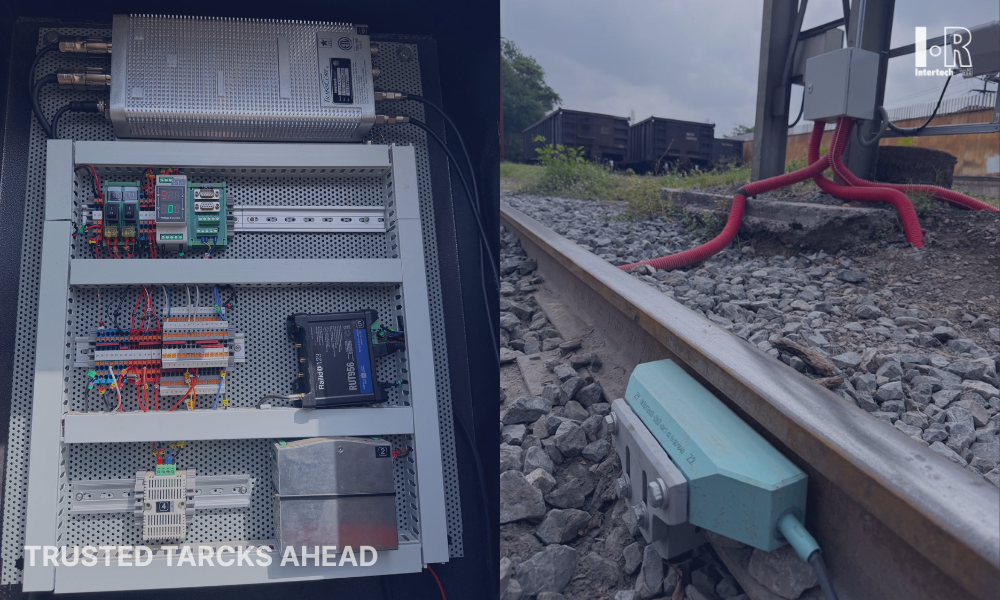
Risk-based inspection planning depends on understanding which assets are most likely to fail and which failures carry the greatest operational impact. Explore how the Wheel Sensor, Rail-ID Edge, and Rail-ID Server help rail operators collect, analyze, and prioritize the asset condition data needed to support smarter maintenance decisions and more efficient resource allocation. For more information about these solutions, contact the Intertech Rail team.
Review Risk Scores Monthly and Update Maintenance Priorities
Risk is not static. A location that appears stable today may become a concern after a season of severe weather, increasing traffic levels, or repeated maintenance interventions. Reviewing risk scores regularly helps ensure that Railway inspection planning reflects current conditions rather than historical assumptions.
One lesson appears repeatedly across rail networks adopting Railway maintenance prioritization strategies. The objective is not to eliminate scheduled maintenance entirely. Rather, it is to spend more time where attention is genuinely needed and less time where risk remains low.
That shift may sound modest on paper. In practice, it can change how maintenance resources are used across an entire network.
GO DEEPER ON THESE TRACKS: Risk-based inspection planning is most effective when it is supported by accurate asset condition data and a clear understanding of failure drivers. Explore What Data Should Trackside Equipment Capture for Early Warning Maintenance? to learn which asset health indicators matter most, discover how environmental factors can influence failures in How Can Rail Operators Use Failure History and Weather Data to Predict Signaling Problems?, and review the broader maintenance strategy behind What Is Condition-Based Maintenance in Railway Signaling? A Practical Guide to Reducing Unplanned Failures. These related articles are already published or will be available soon.
What is Signaling and how does it work?
Railway signaling is the system used to safely control train movements across a network. It combines signals, track circuits, relays, switch machines, and control systems to communicate movement authority and track conditions. By continuously monitoring train positions and route status, signaling systems help prevent conflicts and ensure trains operate safely and efficiently.
Why is Signaling important for modern railway operations, and what challenges can it solve and what benefits does it provide?
Signaling is fundamental to railway safety, capacity, and reliability. It helps prevent collisions, protects work zones, manages train spacing, and supports efficient traffic flow. Modern signaling systems also reduce operational delays, improve network utilization, and provide operators with greater control over increasingly complex rail operations.
What technologies are commonly associated with Signaling?
Common signaling technologies include track circuits, axle counters, fail-safe relays, interlocking systems, switch machines, wayside signals, centralized traffic control (CTC), communications-based train control (CBTC), positive train control (PTC), and condition monitoring systems. Digital communications and remote diagnostics are also becoming increasingly important within modern signaling environments.
What Intertech Rail solutions are available for Signaling?
Intertech Rail provides signaling-related solutions, including fail-safe relays, relay sockets and plugboards, switch machines, wheel sensors, and railway control hardware. These products support signaling infrastructure used in interlockings, track circuits, route control systems, and other safety-critical railway applications.
Share article