Customer Visibility Portals Based on Yard Data
How Can Railroads Use Yard Data to Provide Real-Time Customer Visibility Portals?
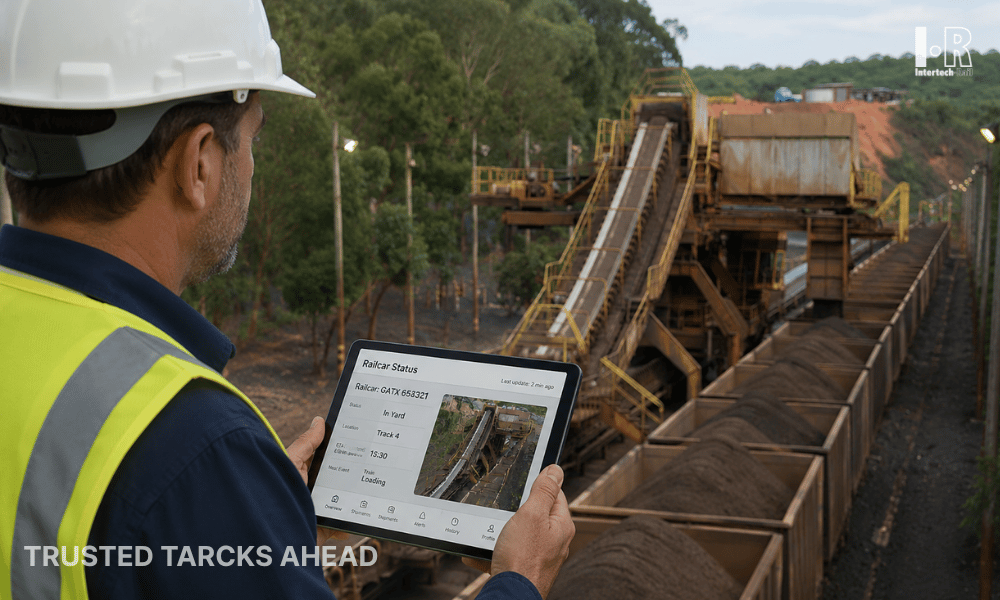
Customers have been asking the same questions for years. Where is my railcar? Has it left the yard? Has it been interchanged?
Today, most expect to find those answers online without contacting the railroad. In many cases, the information already exists. The challenge is making yard data available in a clear and useful way.
What Do Freight Customers Want to See About Their Rail Shipments?
Current Location and Status of Cars
Most customers simply want to know where their railcars are, whether they have arrived, been assigned to a train, or already departed.
Estimated Time of Departure and Arrival
Departure and arrival estimates help customers plan unloading, truck scheduling, inventory, and production activities.
Why Are Many Railroads Still Behind in Visibility?
Fragmented Systems and Manual Status Updates
The issue is rarely the lack of information. More often, yard data, AEI readers, dispatch systems, and manual records operate separately, making customer updates slower than they should be.
Limited Use of Real-Time Yard and Train Data
Most railroads already collect real-time yard data throughout the day. The problem is that much of it never leaves the operational environment, so customers continue seeing information that is already out of date.
Building Customer Visibility on Top of Yard Data
A customer portal does not need to display everything happening in the yard. It only needs to present the events that matter to the shipment.
What Yard Events Are Relevant for Customer Portals?
Car Arrival, Placement, and Train Assignment
Car arrival, placement on a yard track, train assignment, and release for departure are the updates customers usually expect to follow.
Train Departure and Interchange with Other Railroads
Once a train leaves the terminal or is interchanged to another railroad, customers know the shipment is continuing as planned. Those milestones are often the updates they care about most.
How Should Data Be Filtered and Presented?
Customer-Specific Views for Only Their Cars
The portal should display only the customer's own railcars. That keeps the interface simple and avoids exposing information about other shipments.
Simple Status Codes for Non-Technical Users
Internal railroad codes rarely mean much outside the operations department. Clear messages such as "Arrived at Yard," "Assigned to Train," or "Departed
Terminal" are easier to understand and usually answer the customer's question immediately.
Technology Architecture for Visibility Portals
The portal is only the visible part of the system. Most of the work happens behind it, where operational applications exchange event information automatically.
How Do Yard Systems Connect to Customer-Facing Tools?
APIs for Event Data and Car Status
Most modern yard systems already support APIs that make rail yard data available to external applications. Once event information is shared consistently, customer visibility portals can update automatically without relying on manual entry.
Security and Access Control for External Users
Customers should only be able to see shipments that belong to them. Access control and secure authentication are basic requirements whenever operational information is shared outside the railroad.
What Features Increase Adoption and Satisfaction?
Notifications for Key Events and Delays
Notifications become useful when something changes. A departure, an interchange, an arrival, or an unexpected delay can all trigger an automatic update, so customers do not need to keep checking the portal.
Self-Service Reports for Billing and Performance Review
Historical reports allow customers to review transit times, dwell time, shipment history, and billing information whenever they need it. They also reduce routine requests to railroad staff and make performance reviews much easier.
GO DEEPER ON THESE TRACKS: Real-time customer visibility is built on reliable operational data, well-managed rail yard performance, and dependable railway infrastructure. Explore
What Is Rail Yard Performance Management? The Complete Guide to Turning Yard Data into Operational Results
to understand how operational visibility supports customer service, discover
What Is Condition-Based Maintenance in Railway Signaling? A Practical Guide to Reducing Unplanned Failures to learn how reliable infrastructure improves service quality, and review
How Can Rail Yards Use Operational Data to Detect Near-Misses and Improve Safety Performance? to see how operational analytics strengthen both safety and customer confidence. These related articles are already published or will be available soon.
What is Asset Visibility, and how does it work?
Asset visibility refers to the ability to monitor the location, condition, status, and utilization of physical assets across an operation. In rail environments, this includes rolling stock, maintenance equipment, containers, and other critical resources. Data is gathered automatically and consolidated into systems that provide a unified operational view.
Why is Asset Visibility important for modern railway operations, and what challenges can it solve, and what benefits does it provide?
Without reliable asset visibility, organizations often struggle with asset utilization, inventory control, and operational planning. Improved visibility helps reduce uncertainty, improve resource allocation, support maintenance activities, and provide stakeholders with accurate information about asset availability and operational status.
What technologies are commonly associated with Asset Visibility?
Asset visibility programs often combine RFID, AEI, GPS tracking, condition monitoring systems, IoT sensors, enterprise software, analytics platforms, and operational dashboards. Integrating multiple data sources allows organizations to gain a more complete understanding of asset performance and utilization.
What Intertech Rail solutions are available for Asset Visibility?
Intertech Rail provides identification, tracking, and data management solutions that support asset visibility initiatives. Through the Rail-ID® ecosystem, operators can capture movement events, maintain asset records, and improve access to operational data across railway networks and facilities.
Share article