Railway Safety Training: Professional Development Programs for Fail-Safe Relay and Signaling Systems
How Railways Prepare the People Who Keep Signals Honest
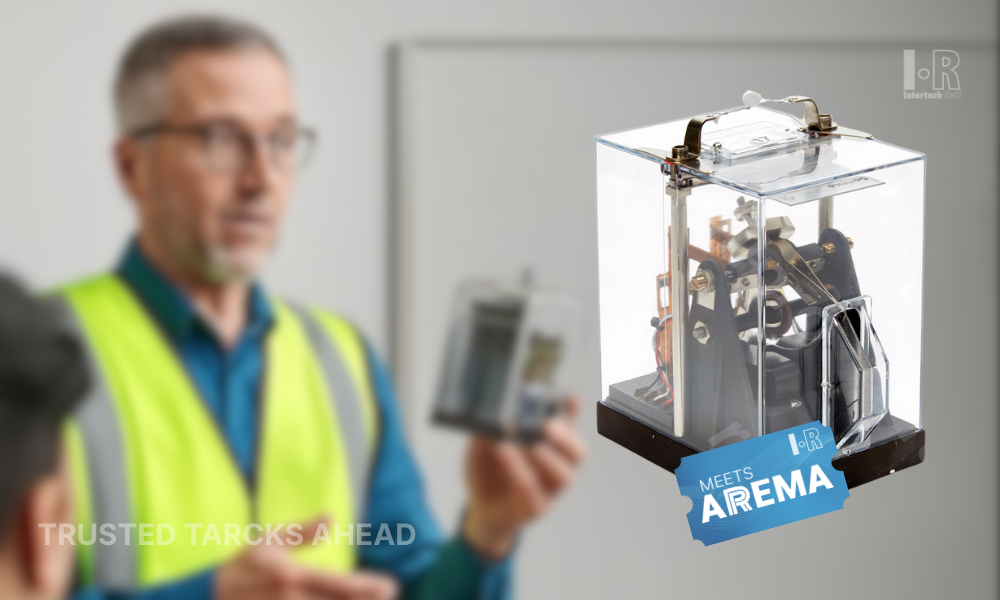
Walk into any relay room, and you quickly realise something: equipment alone does not make a railway safe. What truly anchors a signaling system is the person who stands in front of it, deciding what to test, what to question, and what to trust.
That awareness does not appear overnight. It comes from training, the kind built around experience, not memorized pages.
Training Requirements for Railway Safety Systems
Railways operate in an environment where nothing is allowed to be uncertain for long. A system either proves it is safe, or it is treated as unsafe. Because of that, training programs for signaling teams rarely stay superficial. They dig into the logic behind “fail-safe” thinking and the habits required to maintain it.
Competency, Certification, and Training Delivery Methods
Most operators begin with competency expectations. Technicians need to show they can read diagrams without hesitation, follow logic paths, and recognise when a value looks out of place.
Certification formalises this. Sometimes it is handled internally; in other cases, external agencies define the process. Either way, the goal is the same: ensuring that anyone touching signaling equipment has more than a basic grasp of how the system reacts under stress.
Methods for delivering training vary widely. Traditional classrooms still help when concepts get dense. Still, few people fully understand relays until they hear them, test them, or open a cabinet on a warm day when humidity changes everything.
Field demonstrations, simulations, and self-paced online reviews each format covers a different part of the learning curve. Most organisations discovered long ago that mixing these approaches produces people who can think clearly when things stop behaving as they should.
Specialized Training for Fail-Safe Systems
Fail-safe design sounds simple on paper. In practice, it demands a kind of technical instinct. You learn to notice things that do not look wrong yet, but will be later: a coil warming unevenly, a dropout happening a touch too quickly, a contact arm moving with slightly more hesitation than last week.
Technical, Operational, and Safety Case Training
Technical Training
Here, trainees focus on understanding why equipment behaves the way it does. They work through timing tests, contact condition checks, relay cleaning routines, and interactions between old hardware and modern monitoring units. Technical sessions often reveal the gap between diagrams and lived reality.
Operational Training
Operational staff learn how signaling choices ripple through the timetable. They study degraded modes, incident response, and the communication patterns needed when a single fault affects multiple routes. Operations training often includes scenarios based on past events, because real railway problems rarely repeat themselves neatly.
Safety Case Training
This portion helps teams understand how risks are recorded and justified. Participants learn to read safety arguments, evaluate how evidence supports a design choice, and see why seemingly small details must be documented. Once people understand the logic behind these systems, they tend to follow procedures more consistently.
Why Training Shapes Long-Term Reliability
Good training quietly strengthens an entire network. A technician who knows what “normal” sounds like will notice when a relay begins to age. A dispatcher familiar with degraded logic will respond more quickly when the system enters an unexpected state.
Knowledge spreads, too. Senior staff pass down lessons that never make it into manuals: how a cabinet behaves in winter, which terminal tends to loosen over time, or which timing test should always be repeated even if it passes the first time.
Railway safety
training ties together equipment, people, and procedure. It offers a structured way to develop judgment, not just skills.
By grounding professionals in technical understanding, operational awareness, and safety reasoning, the industry builds teams capable of supporting both long-serving relay systems and the new digital layers now appearing beside them.
In a world where trains move because someone chose the safe option a few seconds earlier, training remains one of the most dependable safety tools a railway can invest in.

Share article