Railway Yard Management Software: Optimizing Rail Yard Operations with Integrated Control Systems
The Challenge of Modern Rail Yard Operations
If mainline railroading is about flow, yards are about friction. Everything that looks clean on a plan gets messy once locomotives start moving: late arrivals, cars out of order, crews changing, weather turning, one switch that doesn’t feel “right.” None of this is dramatic. It’s routine. And it’s exactly why yards can’t rely on memory and radio calls alone, especially when volumes rise.
In a yard, a small uncertainty spreads fast. One unclear car location becomes two phone calls, then a pause, then a decision made with incomplete confidence. Yard management software is often introduced as “optimization,” but in practice, it’s usually a way to stop doubt from multiplying.
Complexity of Yard Management
High-Density Operations and Limited Space
Yards run tight. Tracks fill up, clearances matter, and there’s rarely a spare lead waiting for you. When space is limited, time becomes expensive. A blocked track can stall movements that don’t even share the same destination.
Coordinating Multiple Trains and Switching
Switching is coordination under pressure. Several crews, multiple consists, routes that change mid-task. People can handle this, but the yard has a habit of punishing assumptions. A shared operational picture helps, mostly because it prevents two teams from working from two different “truths.”
Safety and Efficiency Balance
Yards live on the edge between speed and caution. When something feels uncertain, experienced operators slow down. That “hesitation” is often a safety control, not a weakness. The system needs to respect that reality.
Traditional vs. Modern Yard Management
Manual Tracking Limitations
Clipboards, whiteboards, spreadsheets, radio calls, these methods work until they don’t. They rely on continuity of staff and stable traffic patterns. When either changes, manual tracking becomes a patchwork of partial updates. People compensate, but the workload climbs quietly.
Need for Real-Time Visibility
Real-time visibility sounds like a buzzword until you’ve watched a yard lose an hour because a single cut of cars was assumed to be somewhere else. Visibility doesn’t eliminate mistakes. It just shortens the time between “we think” and “we know.”
Yard Management Software Features and Capabilities
Core System Functions
Real-Time Train and Car Location Tracking
A yard system should answer a simple question quickly: where is it right now? Not five minutes ago. Not after someone checks with a colleague. When tracking is reliable, decisions stop being negotiations.
Automated Switch and Route Control
Automation is most useful when it enforces consistency. Route setting and release logic can be applied the same way every time, even when the yard is busy and attention is split. It doesn’t replace operators; it supports them when the workload becomes uneven.
Yard Capacity Optimization
Capacity management in yards is less about perfect utilization and more about avoiding dead ends. A good system highlights pressure points early: which tracks are becoming traps, which moves will box you in, which plan will look fine for ten minutes and then collapse.
Integration with Yard Equipment
Wheel Sensors and Detection Systems
Yards need reliable detection because movements are short and direction changes are common. Wheel sensors and counting points provide clean occupancy signals without relying on rail conditions. In practice, that matters on wet days, dusty days, and “everything is dirty” days. Intertech Rail’s wheel sensor solutions fit naturally into this layer, as part of the detection backbone rather than as a headline feature.
Fail-Safe Relays and Interlocking
No yard system should “outvote” safety logic. Interlocking and fail-safe relay principles remain the authority for movement permission. The software coordinates; the safety layer decides. That separation is not bureaucracy, it’s protection.
Signal and Semaphore Control
Crews trust what they can see. If the system’s decisions are clearly reflected in signals, indications, and yard-facing interfaces, confusion decreases. When indications are inconsistent, crews slow down, rightly so.
Yard management software is typically sold as a means to increase efficiency. But the more honest benefit is calmer operations: fewer arguments about basic facts, fewer last-minute reversals, fewer “we’ll figure it out” moments. In rail yards, that calm is not cosmetic. It’s operational control.
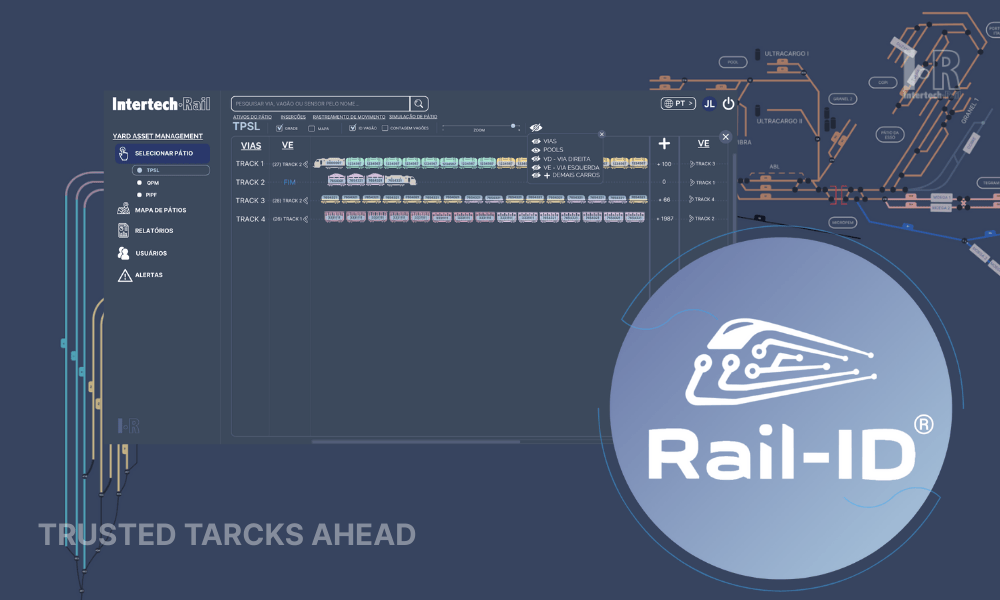
By the way, Intertech Rail’s Yard Management Software brings together real-time asset tracking, movement monitoring, and operational data in one system, helping yard teams understand what is happening on the ground, reduce manual work, and run daily operations more safely and efficiently.
Share article