Railway Switch Machines and Needle Detectors: Essential Components for Safe and Reliable Track Switching
Understanding Railway Switch Machines
Switch machines are easy to overlook. They sit beside the track, exposed, repeating the same movement hundreds of times. When they behave as expected, no one comments. When they do not, everything stops.
That contrast explains their importance better than any specification. At a turnout, there is little room for interpretation. A route is either set correctly or it is not. Steel must move, settle, and stay where it was placed.
Function of Switch Machines
Electrical to Mechanical Actuation
A command leaves the control system as an electrical signal. From there, it becomes torque, motion, and resistance. Motors turn, linkages respond, locks engage. The sequence is familiar, but the conditions rarely are.
What matters is not how impressive the mechanism looks, but whether it repeats the same movement tomorrow, and the day after, without surprise.
Safe and Reliable Point Movement
A switch that moves “almost” correctly is still wrong. Partial movement has no useful meaning in railway operations. The points must close fully and remain closed. Anything else is treated as uncertainty.
Types of Switch Machines
Electric Point Machines
Electric point machines are widely used because people understand them. Over time, maintainers develop a sense for how a healthy machine behaves. Sometimes that intuition appears before any measurement does.
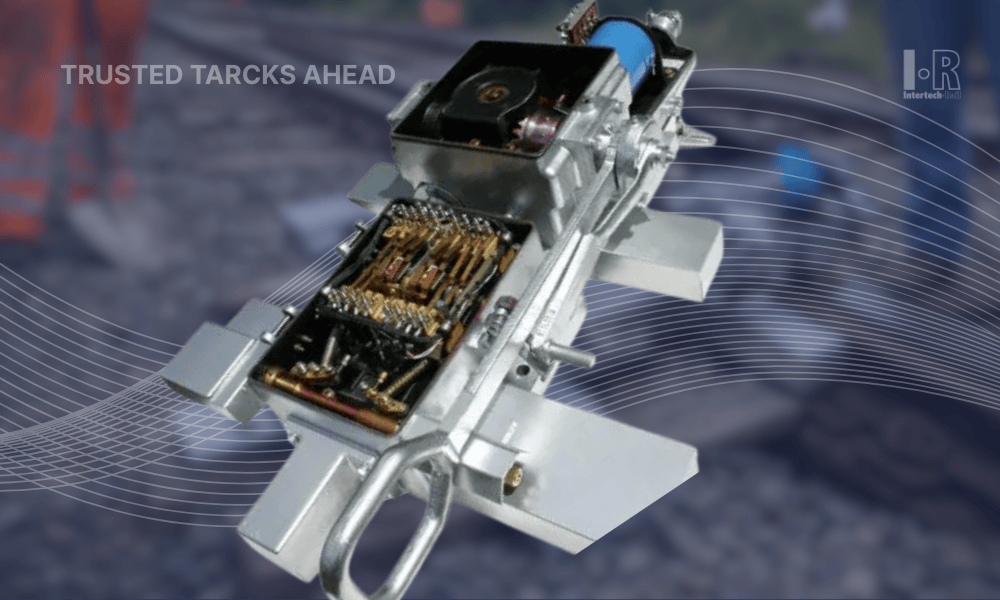
The IRM23 switch machine builds on the long-established M23 platform, combining independent locking and point detection with a robust permanent-magnet motor designed for repeated operation under mainline conditions. Its multiple gear ratios, flexible voltage options, and fully interchangeable design make it suitable for a wide range of turnout geometries, while features such as manual loop operation and integrated heating reflect practical considerations that matter once the equipment is in service, not just on paper.
Hydraulic and Pneumatic Systems
Hydraulic and pneumatic machines are often present where higher forces are needed or where infrastructure decisions were made long ago. They work well, but they can change character subtly with temperature, pressure, or wear.
Manual vs. Powered Switches
Manual switches still exist in quieter areas. As traffic increases, the margin for hesitation disappears. What was once acceptable becomes risky, even if nothing else has changed.
Critical Performance Requirements
Force and Stroke Specifications
Every turnout resists movement in its own way. Too little force leaves doubt. Too much force accelerates damage. The correct balance is rarely obvious on paper.
Reliability and Environmental Resistance
Switch machines live close to ballast, moisture, vibration, and temperature shifts. Designs such as those used by Intertech Rail focus on remaining predictable under these ordinary conditions, rather than assuming a clean environment that rarely exists.
Needle Detection Technology
Importance of Switch Position Detection
Verification of Complete Movement
Issuing a command is not the same as knowing the outcome. Needle detectors exist to confirm reality, not intention. They answer a simple question after the movement is over.
Prevention of Unsafe Train Movements
If confirmation is missing, trains do not move. This is not a failure. It is a deliberate response to uncertainty.
Needle Detector Design and Operation
Contact-Based Detection
Many needle detectors rely on direct mechanical contact. These systems appear simple, but simplicity does not mean tolerance. They must remain trustworthy despite dirt, wear, and small misalignments.
Fail-Safe Design Principles
When information is lost, the system does not guess. It restricts. Silence is treated as a warning, not as approval.
Integration with Interlocking Systems
Needle detectors report directly to interlocking logic. The interlocking waits. It does not assume. That restraint keeps decisions tied to what is actually happening at the track.
Switch machines and needle detectors rarely draw attention when they work properly. Their value appears in routine movements, uneventful route setting, and the absence of questions. In railways, that quiet consistency is often the clearest sign that a system can be trusted.
Share article