How Should Rail Yards Integrate Rail-ID® and AEI Data with ERP, TMS, and Billing Systems?
The Role of Yard Data in Enterprise Processes
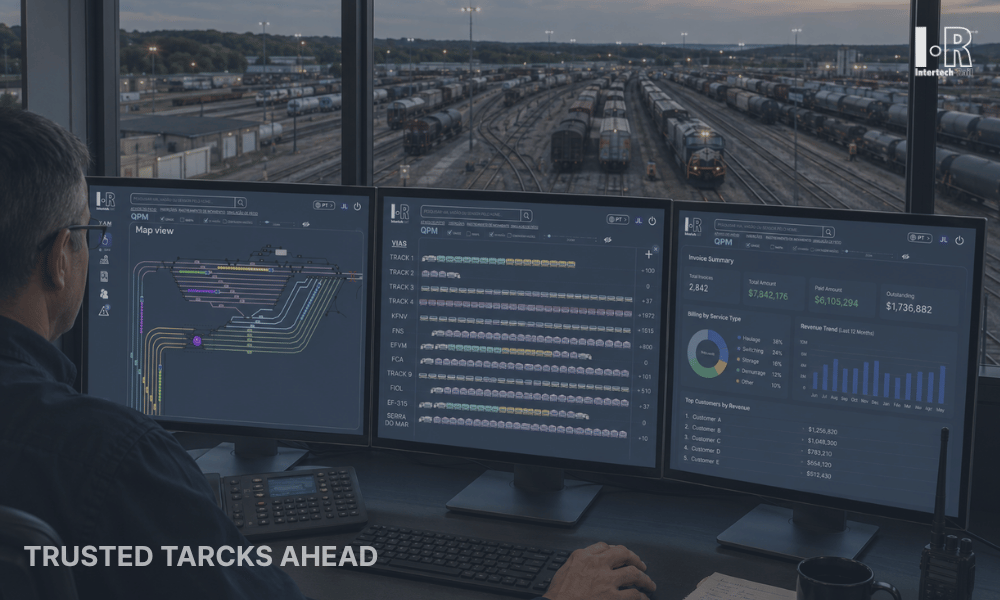
Collecting accurate yard data is only part of the job. The real value appears when that information reaches the systems people rely on every day: operations, customer service, finance, and logistics.
Anyone who has investigated a billing dispute knows how quickly things become complicated when yard records don't match enterprise data. A missed movement event or an incorrect timestamp can lead to hours of manual verification, even when the train itself operated exactly as planned.
What Business Processes Depend on Accurate Yard Data?
A single movement recorded by Rail-ID® or AEI can trigger several business processes automatically, provided the information flows reliably between systems.
Billing, Demurrage, and Contract Compliance
Arrival and departure events often determine when billing begins, how demurrage charges are calculated, and whether contractual service commitments have been met.
If those records arrive late or contain inconsistent data, finance teams usually end up reviewing transactions manually before invoices can be released.
Fleet Management and Asset Utilization Reporting
Equipment availability, car cycle time, dwell time, and fleet utilization all depend on reliable movement history. Without consistent data, performance reports quickly lose credibility, making operational decisions harder rather than easier.
Why Is Integration Often a Weak Link?
The technology inside the yard is not always the problem. More often, the challenge begins after the data leaves the yard system.
Manual File Transfers and Spreadsheet Workarounds
Many railroads still exchange information through scheduled file exports, spreadsheets, or manual imports between applications developed years apart.
Those workarounds may function for daily operations, but they leave plenty of room for delays, duplicate records, and human error.
Different Data Models and Field Definitions Between Systems
One system may identify a location by track number, another by operating zone, and a third by terminal code. Individually, each approach makes sense. Together, they can create confusion unless the data is mapped consistently.
Integration Architecture Options
There is no single integration model that fits every railroad. The right approach usually depends on existing infrastructure, system maturity, and operational requirements.
What Are Common Ways to Connect Yard Systems to ERP/TMS?
Older environments often rely on scheduled exchanges, while newer platforms increasingly support continuous data sharing.
Batch File Transfers and Scheduled Exports
Batch processing remains common where immediate updates are not essential. It is relatively simple to maintain and works well for reporting or overnight reconciliation.
APIs, Web Services, and Real-Time Event Streaming
Operations that require immediate visibility generally benefit from API-based integration or event streaming, allowing movement records from Rail-ID® and AEI to reach ERP and TMS platforms within seconds.
Which Data Fields Are Critical to Map Correctly?
Integration problems are often traced back to a few fields that were interpreted differently by connected systems.
Car ID, Train ID, Customer ID, and Service Codes
Consistent identifiers ensure every event is linked to the correct equipment, customer, and transportation service throughout the transaction lifecycle.
Location, Timestamp, and Event Type Definitions
A timestamp recorded in the wrong time zone or an event classified differently between systems may seem like a small issue, but it can affect billing, reporting, and operational analysis.
Ensuring Data Quality Across Systems
Good integration depends as much on governance as it does on technology.
How Can Operators Keep Master Data Consistent?
Reliable data starts with disciplined maintenance of reference information.
Centralized Car Master Database Governance
Maintaining a single source of truth for equipment records reduces inconsistencies as information moves between operational and enterprise platforms.
Validation Rules for New Cars, Tags, and Customers
Simple validation checks before new records enter production help prevent duplicate identifiers and incomplete customer information from spreading across multiple systems.
How Do You Handle Exceptions and Integration Failures?
Even well-designed interfaces occasionally fail. The important part is detecting issues before they affect business processes.
Monitoring Interfaces and Error Logs
Continuous monitoring allows support teams to identify failed transactions, communication interruptions, or unexpected data formats before they generate downstream problems.
Standard Operational Procedures for Correcting Records
Clear procedures for reviewing, correcting, and republishing records help maintain confidence in both operational data and financial reporting.
Measuring Integration Success
What KPIs Show That Yard–ERP Integration Is Working Well?
The best integrations are often the ones nobody notices because information simply arrives where it should.
Reduction in Manual Adjustments and Rebilling
Fewer billing corrections and less manual intervention usually indicate that operational events are reaching enterprise systems accurately.
Time to Publish Operational Data to Finance and Customers
Another useful indicator is how quickly validated yard events become available to finance teams, customer portals, and reporting systems. When that delay shrinks from hours to minutes, both operational efficiency and data confidence tend to improve.
GO DEEPER ON THESE TRACKS: Successful system integration creates the foundation for digital modeling, intelligent dispatch, and resilient rail operations. Explore
What Is a Rail Yard Digital Twin and How Can It Improve Freight Operations? to understand how connected data powers virtual rail yard models, discover
How Can AI-Powered Decision Support Improve Rail Yard Dispatch and Train Make-Up? to see how integrated information improves dispatch decisions, and review
How Can Rail Operators Protect Yard Automation and AEI Systems from Cybersecurity Threats? for best practices in protecting interconnected rail systems. These related articles are already published or will be available soon.
What is Asset Visibility, and how does it work?
Asset visibility refers to the ability to monitor the location, condition, status, and utilization of physical assets across an operation. In rail environments, this includes rolling stock, maintenance equipment, containers, and other critical resources. Data is gathered automatically and consolidated into systems that provide a unified operational view.
Why is Asset Visibility important for modern railway operations, and what challenges can it solve, and what benefits does it provide?
Without reliable asset visibility, organizations often struggle with asset utilization, inventory control, and operational planning. Improved visibility helps reduce uncertainty, improve resource allocation, support maintenance activities, and provide stakeholders with accurate information about asset availability and operational status.
What technologies are commonly associated with Asset Visibility?
Asset visibility programs often combine RFID, AEI, GPS tracking, condition monitoring systems, IoT sensors, enterprise software, analytics platforms, and operational dashboards. Integrating multiple data sources allows organizations to gain a more complete understanding of asset performance and utilization.
What Intertech Rail solutions are available for Asset Visibility?
Intertech Rail provides identification, tracking, and data management solutions that support asset visibility initiatives. Through the Rail-ID® ecosystem, operators can capture movement events, maintain asset records, and improve access to operational data across railway networks and facilities.
Share article