ROI Calculator: Justifying Fail-Safe Relay Upgrades to Finance and Executive Teams
Building the Business Case for Safety Investments
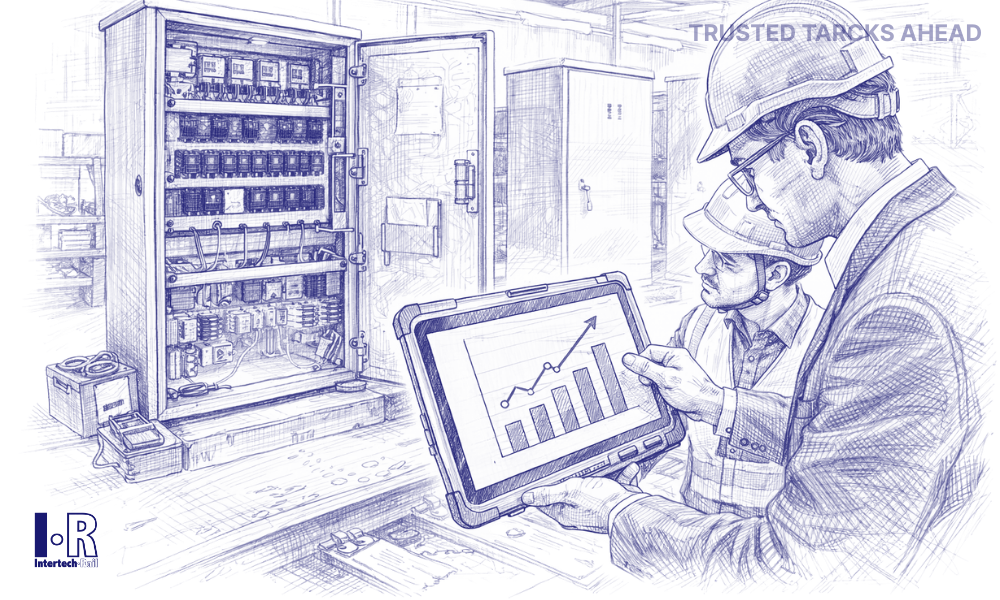
Safety upgrades rarely fail for technical reasons. They stall when someone asks for numbers.
When engineers propose improvements to a Fail-Safe Relay system, the conversation quickly shifts from risk and reliability to capital allocation. The question becomes direct: What is the return? Translating engineering risk into financial logic is uncomfortable, but it is necessary.
The Challenge of Quantifying Safety Value
Unlike capacity expansion, safety does not generate visible revenue. Its benefit is the absence of failure. That makes Safety investment ROI harder to defend than other infrastructure projects.
Hard Costs vs. Avoided Costs in Safety Projects
Capital expenses are easy to quantify: equipment, installation, and testing. Avoided costs are not. They include reduced emergency interventions, fewer service interruptions, and lower exposure to litigation. In railways, those avoided losses can quietly exceed the initial investment.
CFO Perspectives on Infrastructure Spending
Finance teams look for predictability. They analyze depreciation, payback periods, and capital efficiency. A strong Capital project justification does not dramatize risk; it connects modernization to long-term operational stability.
Framework for ROI Analysis of Relay Modernization
A practical model reduces friction between engineering and finance.
Total Cost of Ownership vs. Initial Capital Cost
The purchase price of a Fail-Safe Relay cabinet tells only part of the story. Inspection frequency, spare parts usage, and corrective maintenance shape lifecycle cost. Older systems often appear inexpensive until cumulative labor and reactive repairs are calculated.
Time Horizon Selection for Long-Life Assets
Signaling equipment operates for decades. Evaluating it within short financial windows distorts its true value. Long-horizon modeling reflects operational exposure more realistically.
Discount Rates and NPV Calculations for Safety Projects
Using Net Present Value calculations allows safety investments to be compared fairly with other capital demands. Even with conservative assumptions, relay modernization frequently shows stable long-term financial benefit.
Common Objections from Finance Teams
“The Old System Still Works” Argument
Functioning today does not guarantee resilience tomorrow. Aging relays lose tolerance under stress long before complete failure occurs.
Budget Constraints and Competing Priorities
Rail organizations constantly balance modernization projects. A clear Infrastructure upgrade business case must demonstrate that reliability supports, not competes with, other investments.
Uncertainty in Quantifying Risk Reduction
Risk reduction is probabilistic. However, historical maintenance records and response costs provide defensible inputs for Safety equipment cost-benefit analysis.
Quantifiable Benefits of Modern Fail-Safe Relays
Modern Fail-Safe Relay architectures, such as conservative relay-based signaling platforms similar to those supported by Intertech Rail, emphasize predictable failure behavior and mechanical margins. That design philosophy has measurable financial implications.
Direct Cost Savings
- Reduced Maintenance Labor Hours and Frequency: Fewer adjustments and simplified inspections result in fewer recurring labor commitments.
- Lower Spare Parts Inventory Requirements: Standardized modules decrease inventory diversity and tied-up capital.
- Decreased Emergency Call-Out Costs: Improved reliability lowers reactive intervention costs and operational disruption.
- Energy Efficiency Improvements: Incremental efficiency gains accumulate over time across distributed installations.
Avoided Costs and Risk Reduction
- Accident Prevention and Liability Reduction: Major incidents carry legal and regulatory exposure that can far exceed the costs of hardware.
- Service Disruption Avoidance and Revenue Protection: Even short service interruptions can ripple across supply chains.
- Regulatory Fine Prevention and Compliance Costs: Modern systems simplify documentation and audit processes.
Insurance Premium Reductions: Improved signaling reliability can positively influence long-term risk assessments.
Upgrading a Fail-Safe Relay system is not about replacing components. It is about reducing uncertainty in critical infrastructure.
When lifecycle data and risk exposure are presented clearly, the financial case becomes less abstract. Safety does not promise revenue growth. It protects continuity, and continuity has value.
Share article