Freight Train Derailment Case Studies: Lessons Learned from Signal Relay Failures in North America
Analyzing Major Derailment Incidents
Freight rail does not fail all at once. It weakens first. Contacts wear. Clearances shift. Someone logs a minor anomaly and moves on. Months later, a derailment happens, and everyone asks what changed.
Understanding the causes of train derailments is rarely about a single dramatic malfunction. It is usually about small degradations lining up at the wrong time.
Analyzing Major Derailment Incidents
The Role of Signaling Failures in Derailment Causes
Signaling does not usually “cause” derailments alone. But when it stops protecting the system, the margin disappears. In several North American train accident investigations, relay-related faults were not the headline, yet they were part of the chain. That distinction matters.
Statistical Analysis of Signal-Related Derailments (2015–2025)
According to data published by the U.S. Federal Railroad Administration (FRA), track-related causes continue to dominate derailment statistics. Signaling-related factors, while less frequent as primary causes, appear periodically as contributing elements in complex incidents. Numbers alone do not tell the story. Failure modes do.
Financial Impact and Litigation Costs
When a freight derailment occurs, repair costs are only the beginning. Legal exposure, regulatory reviews, and operational disruption can exceed the physical damage. Many internal reviews later reveal prior warning signs that seemed insignificant at the time.
Case Study 1: Mainline Collision Due to Relay Contact Failure
Incident Timeline and Root Cause Analysis
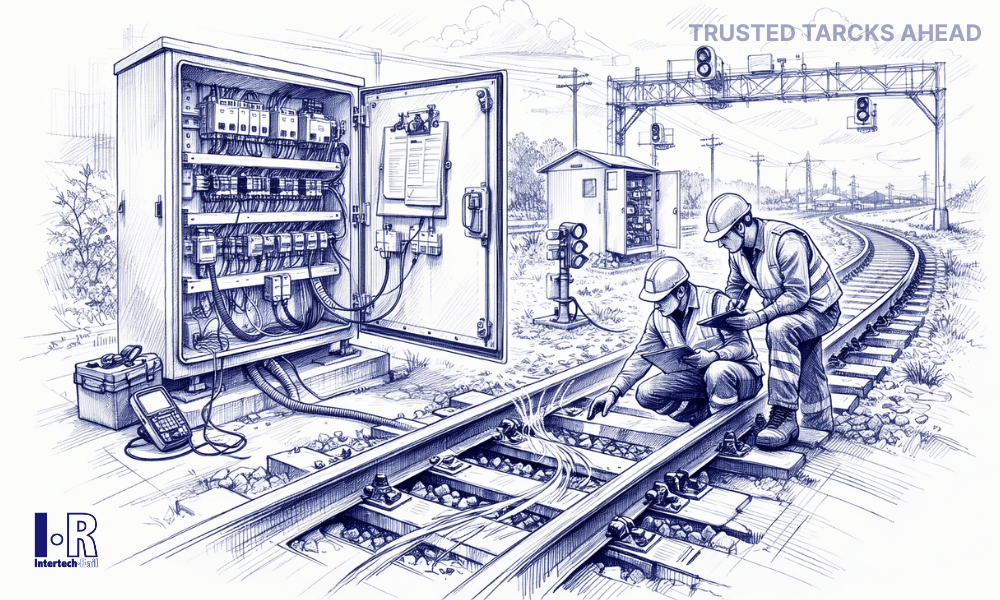
In one documented relay failure case study, a mainline collision was traced back to worn relay contacts inside an interlocking cabinet. Maintenance notes referenced intermittent behavior months earlier. The system passed routine inspection.
It did not pass reality.
How Degraded Relay Contacts Led to False-Clear Indication
As contact resistance increased, the relay no longer dropped reliably under load. Under certain conditions, a false-clear indication appeared. Nothing dramatic. Just a safety layer that did not activate when required.
This is typical in signal failure analysis; the hardware technically works until it doesn’t.
Regulatory Response and Industry Changes
Post-incident reviews emphasized inspection discipline, contact resistance checks, and conservative replacement cycles. Some operators reassessed legacy relay designs, comparing them with more robust fail-safe configurations similar to those used in Intertech Rail’s signaling solutions, where mechanical margins are intentionally conservative.
Case Study 2: Yard Accident from Improper Switch Detection
The Critical Role of Needle Detectors
Yard operations rely heavily on switch detection. A partial obstruction can remain invisible without accurate confirmation logic. In this case, detection feedback did not represent the physical condition. The system believed the switch was aligned. It was not.
Maintenance Gaps and Warning Signs Missed
Inspection intervals had been extended. Minor vibration-induced loosening had been observed but not escalated. A sequence of small oversights led to a larger failure.
Corrective Actions and Technology Upgrades
After the incident, torque verification procedures were tightened. Environmental sealing improved. Relay monitoring routines were revised. The lesson was not about innovation; it was about discipline.
Technical Failure Modes and Prevention
Common Relay Failure Mechanisms in Real Incidents
- Contact Welding and Sticking in High-Current Applications
- High inrush currents can fuse contacts. Once welded, a relay stops behaving predictably.
- Coil Degradation from Environmental Exposure
- Moisture and dust do not cause instant failure. They reduce insulation strength slowly. Years later, the margin is gone.
- Timing Relay Drift and Safety Margin Erosion
- Timing relays are sensitive to mechanical and thermal stress. Drift often goes unnoticed until synchronization fails.
Warning Signs Before Catastrophic Failure
- Intermittent Operation and Nuisance Alarms
- Repeated anomalies are rarely random. They indicate instability.
- Increased Operating Temperature and Noise
- Excess heat inside cabinets is measurable before functional failure occurs.
- Slow Response Time and Mechanical Hesitation
- Response lag is often detectable well before collapse.
Predictive Maintenance Technologies That Could Have Prevented Incidents
- Contact Resistance Monitoring Systems
- Trending resistance reveals deterioration early.
- Thermal Imaging for Relay Cabinet Inspection
- Infrared scanning exposes hidden stress points.
Automated Testing and Performance Trending
Structured testing transforms reactive repair into a preventive strategy.
Most derailments attributed to train derailment causes involve more than one factor. But when signaling loses integrity, the protective layers thin quickly.
For readers interested in deeper technical discussions on relay-based signaling, additional articles are available on our platform, along with detailed information about Intertech Rail’s B1 and B2 fail-safe relay solutions.
At the end, the lesson from repeated train accident investigations is consistent: relay systems do not fail without warning. They signal distress long before collapse. Recognizing and acting on those signals is what separates minor maintenance from a major incident.
Share article