When Should a Relay-Based Interlocking Be Modernized?
From relay interlocking replacement to microprocessor interlocking: how to spot end of life, migrate without shutting the line, and build the business case
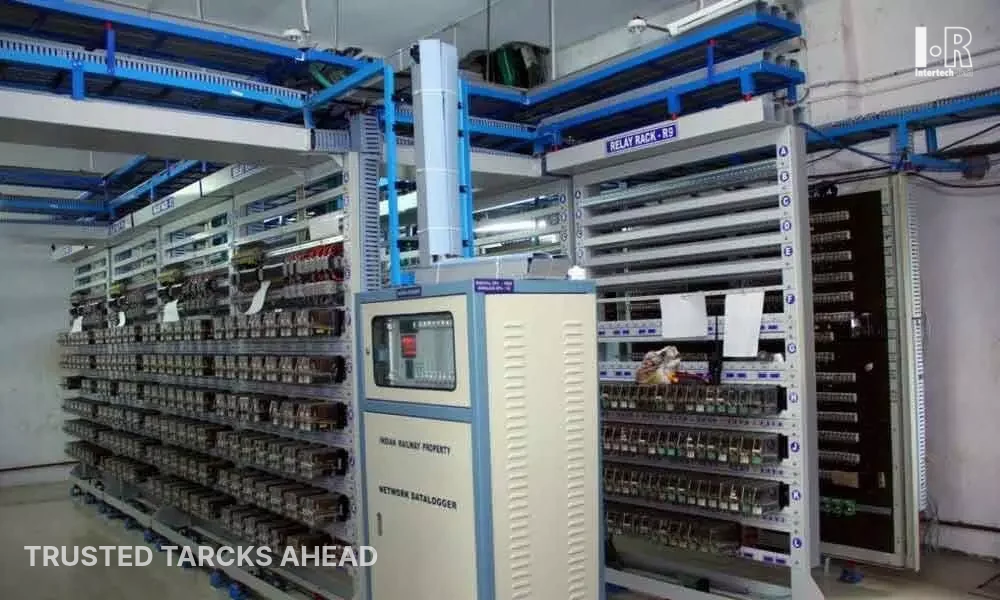
Most relay interlockings were built to last, and many have. The problem is rarely that they stop working. It is that keeping them working gets harder every year.
Signs the Interlocking Has Reached End of Life
Which symptoms indicate real obsolescence?
Spare parts are the first warning. When the only source for a vital relay is a shelf of units pulled from a closed tower, the clock is running. Vendor support shrinks at the same time. Then failures start taking longer to find. A fault that once took an hour now takes a shift, and the overtime shows up in the budget.
What operational limits appear first?
Usually capacity. Operations asks for a new route or another track, and the answer is weeks of rewiring. Relay logic also gives you no data. No event log, no remote view, nothing to explain why a signal dropped at 3 a.m.
What Changes with Microprocessor-Based Architecture
How does the logic itself change?
In a microprocessor interlocking, the logic moves from wires to configurable vital software. That changes how you test. Instead of tracing circuits, you validate application data against the signaling plan, supported by SIL documentation from the supplier.
What new capabilities come with it?
Event logging, remote diagnostics, and clean interfaces to train control and traffic management. A solid-state interlocking can tell the maintainer what happened before anyone drives to site.
Migrating Without Shutting the Line
Which migration strategies are realistic?
Full replacement works on quiet lines with long possessions. Busy networks usually choose a staged cutover or a hybrid, with the new system running alongside relays until each area is proven. Every cutover window needs a tested fallback plan. Not a theoretical one.
What has to be preserved during transition?
Field interfaces, cabling, and existing field assets are often in good condition and can stay. So can the people. Maintainers who know the territory are worth more than any manual, but they need training before cutover, not after.
Cost, Risk, and the Approval Path
How do you build the business case?
Count maintenance hours, delay minutes, and risk exposure, then compare the options honestly. Keeping the existing system costs little upfront, but the risk keeps rising, and nothing new comes with it. A refurbishment buys time at a medium cost, with limited gains. Full replacement is the most expensive option on day one, yet it brings the lowest risk and the full set of new capabilities.
A relay interlocking replacement rarely wins on capital cost. It wins on everything that comes after.
What does the safety approval process demand?
Hazard analysis, verification evidence, and formal sign-off. In the US, depending on scope, an interlocking upgrade railway project may also need FRA approval for the signal system modification. Start that conversation early.
GO DEEPER ON THESE TRACKS: modernization balances maintenance reality, regulation, and capital budget. Explore How Do You Keep Signal and Train Control Testing Compliant? for the testing duties weighing on aging interlockings, discover How Are Train Movements Authorized Where There Are No Signals? to see authority where no interlocking exists, and review How Do You Specify a Switch Machine for Heavy-Haul and Remote Turnouts? for switch machine and SIL4 detection choices. These related articles are already published or will be available soon.
What is Signaling and how does it work?
Railway signaling is the system used to control train movements across a network safely. It combines signals, track circuits, relays, switch machines, and control systems to communicate movement authority and track conditions. By continuously monitoring train positions and route status, signaling systems help prevent conflicts and ensure trains operate safely and efficiently.
TWhy is Signaling important for modern railway operations, and what challenges can it solve and what benefits does it provide?
Signaling is fundamental to railway safety, capacity, and reliability. It helps prevent collisions, protects work zones, manages train spacing, and supports efficient traffic flow. Modern signaling systems also reduce operational delays, improve network utilization, and provide operators with greater control over increasingly complex rail operations.
What technologies are commonly associated with Signaling?
Common signaling technologies include track circuits, axle counters, fail-safe relays, interlocking systems, switch machines, wayside signals, centralized traffic control (CTC), communications-based train control (CBTC), positive train control (PTC), and condition monitoring systems. Digital communications and remote diagnostics are also becoming increasingly important within modern signaling environments.
What Intertech Rail solutions are available for Signaling?
Intertech Rail provides signaling-related solutions, including fail-safe relays, relay sockets and plugboards, switch machines, wheel sensors, and railway control hardware. These products support signaling infrastructure used in interlockings, track circuits, route control systems, and other safety-critical railway applications.
Share article