Railway Balise Systems: Electronic Beacons for Automatic Train Protection and Control
Introduction to Balise Technology
Balise systems rarely receive much attention, even among signaling professionals. That is not because they are unimportant, but because they usually work as expected. From an engineering perspective, balises exist to solve a very narrow problem: delivering precise information at an exact point along the track. Nothing more, nothing less.
Before continuous digital communication became reliable, railways already needed fixed reference points. Balises filled that role. They still do, largely unchanged in principle. In practice, this simplicity is intentional. Engineers tend to trust systems that do not try to be clever.
What are Railway Balises?
Electronic Beacons for Train-Track Communication
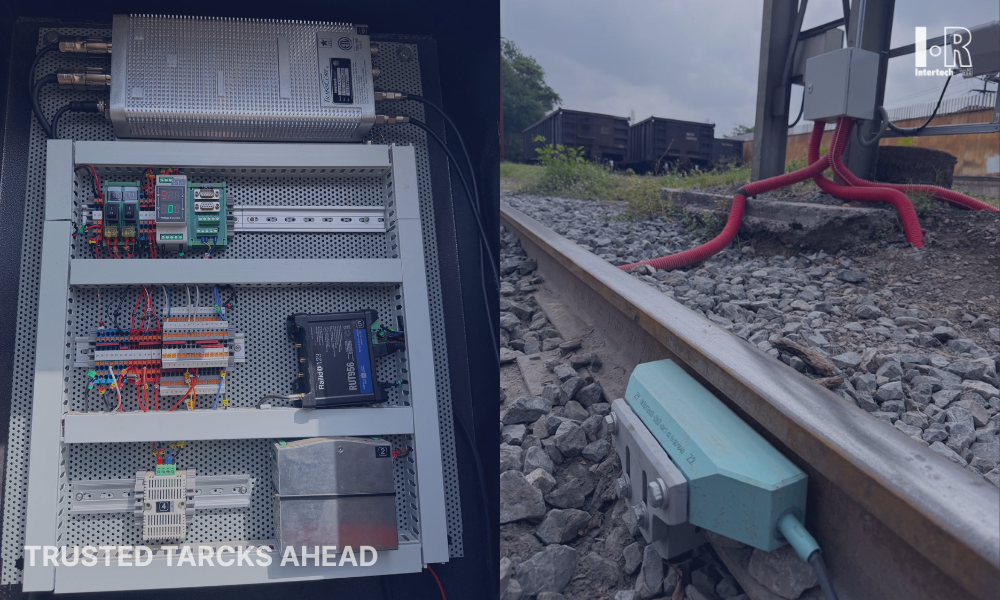
A railway balise is an electronic beacon installed between the rails. As a train passes over it, onboard equipment energizes the balise and receives a short data message. The exchange is brief and localized. There is no uncertainty about where the information was transmitted. Most signaling engineers will recognize why this matters.
Role of Balises in ATP and ATO Systems
In ATP and ATO systems, balises act as fixed reference points. They confirm position, support speed supervision, and anchor onboard calculations. In the field, this often shows up as fewer localization errors, especially where wheel slip or degraded conditions affect odometry.
Types of Balise Systems
Fixed Balises vs. Switchable Balises
Fixed balises always transmit the same information. They are predictable and usually forgotten once installed. Switchable balises can alter their message based on external inputs, such as signal aspects. This flexibility can be useful, although many engineers remain cautious about adding complexity where it is not strictly required.
Eurobalises and Regional Variations
Eurobalises, defined under ETCS specifications, are widely deployed. Regional variations exist, but they rarely change how balises behave on the track. Differences tend to appear in installation rules and maintenance practices rather than core functionality.
Balises in Modern Signaling Standards
ETCS Integration
Within ETCS, balises provide fixed position references that allow onboard systems to recalibrate odometry. This combination of discrete reference points and continuous supervision is deliberate. It accepts that no single method is perfect in all conditions.
CBTC and PTC Applications
Even in CBTC and PTC systems, where radio communication dominates, discrete reference points are still used. In practice, many engineers prefer keeping at least one physical confirmation in the loop.
International Standards and Interoperability
Balise systems follow international standards covering mechanical design, electrical behavior, and data formats. Interoperability is usually taken for granted until an interface does not behave as expected.
Balise System Design and Implementation
Technical Architecture of Balise Systems
Inductive Loop Communication Technology
Most balises rely on inductive coupling. The train supplies energy, the balise responds. There is no battery to replace, which simplifies long-term maintenance.
Data Encoding and Transmission Protocols
Balise messages are tightly defined. They carry only what is necessary. In signaling, excess information rarely improves safety.
Passive vs. Active Balises
Passive balises dominate mainline applications. Active balises exist for specific cases, but they remain the exception.
Installation and Positioning Requirements
Track-Mounted Installation Methods
Balises are mounted directly on the track structure. Installation accuracy matters. Field teams know that small alignment errors can have disproportionate effects later.
Balise Group Configuration and Spacing
Balises are often installed in groups. Spacing is defined by braking curves, operating speeds, and local rules rather than abstract models.
Environmental Protection and Durability
Railway environments are unforgiving. Balises must survive vibration, temperature variation, moisture, and time. Solutions like those supplied by Intertech Rail reflect this reality, focusing on robust construction instead of unnecessary features.
Balise systems remain a quiet foundation of train protection. They rarely attract attention, and most engineers would agree that this is exactly how it should be.
Share article