Accident Investigation and Forensic Analysis: Fail-Safe Relays as a Railway “Black Box”
Accident Investigation and Forensic Analysis: Fail-Safe Relays as a Railway “Black Box”
How relay-based evidence supports reliable and transparent accident investigations.
When a railway incident happens, the priority is always safety and service recovery. Only later does the quieter, more demanding work begin: understanding what actually occurred inside the system.
In practice, accident investigation is less about finding a single cause and more about reconstructing a sequence of conditions. Signaling systems play a central role in this process. Among them, fail-safe relay architectures continue to offer something that modern digital tools often struggle to provide: physical, verifiable evidence of system behavior.
Principles of Railway Accident Investigation
Learning from incidents, not assigning blame
Professional railway investigations are designed to improve systems, not to personalize failure. Experience shows that incidents emerge from combinations of technical constraints, operating decisions, and system responses, rather than isolated mistakes.
Identifying root causes and systemic failures
Investigators look for how protections interacted, how logic was enforced, and where safeguards succeeded or reached their limits. This work depends on evidence that reflects real conditions, not theoretical behavior.
For additional technical insights on fail-safe relays and railway signaling, Intertech Rail provides in-depth resources.
The role of independent investigation bodies
Ensuring objectivity and technical rigor
Independent authorities rely on evidence that can be examined repeatedly and challenged if needed. Physical signaling components often provide that stability, especially when conclusions must remain credible over time.
Fail-Safe Relays as Forensic Evidence
Relays as physical records of system states
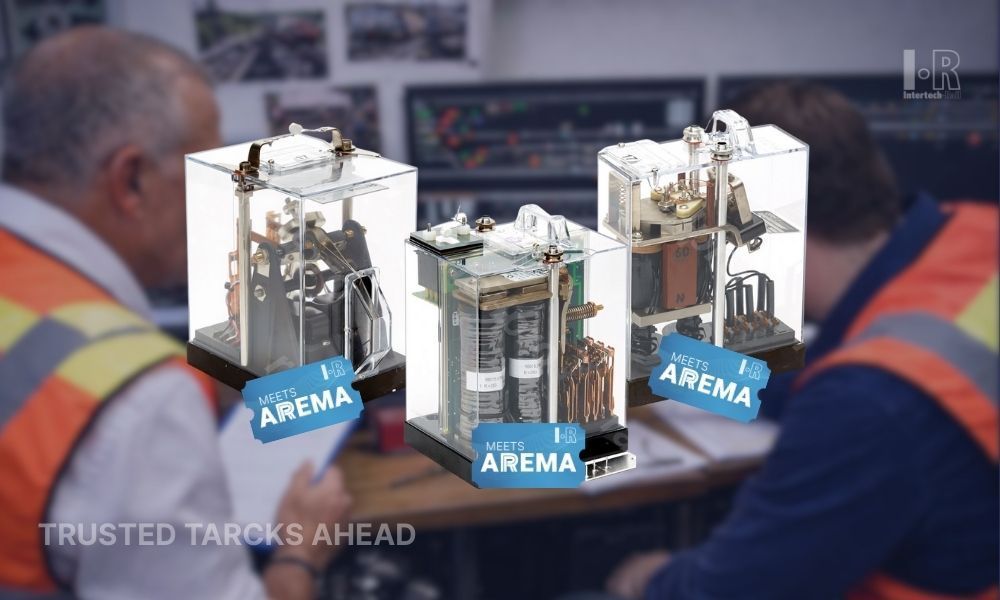
Fail-safe relays record system decisions through their physical state. Contact positions and circuit conditions reveal how interlocking logic responded at specific moments. Unlike software logs, these traces are not overwritten or reformatted after an event.
In relay-based signaling systems, including those commonly supported by Intertech Rail, post-incident inspection can confirm whether routes were locked, commands were inhibited, or protections were correctly enforced.
Reconstructing sequences of events
Event reconstruction using relays is typically incremental. Investigators correlate wiring diagrams, relay positions, and operating rules to rebuild what happened step by step. This slower process often results in higher confidence conclusions.
Integrity and reliability of relay-based evidence
Resistance to data loss or manipulation
Because relays do not depend on data storage or system uptime, their forensic value often survives conditions that compromise digital records, such as power loss or partial system damage.
The Future of Railway Forensics
Challenges of digital evidence
Digital diagnostics add valuable detail, but they also introduce dependencies on configuration, synchronization, and cybersecurity. In complex environments, digital records may require interpretation rather than direct reading.
The enduring value of physical fail-safe records
For this reason, fail-safe relays continue to serve as a stable reference point in investigations. Their simplicity supports transparency and repeatability, even as signaling systems evolve.
Railway accident investigation depends on evidence that remains reliable under scrutiny. Fail-safe relays continue to function as a practical form of railway “black box,” preserving how safety logic behaved when abnormal conditions arose.
As forensic methods advance, the coexistence of digital tools and physical fail-safe records remains essential for trustworthy, technically sound investigations.
Share article